
PartA 2. The National Association of Securities Dealers is investigating whether some brokeragehouses are inappropriately pushing individuals to borrow large sums on their housesto invest in the stock market. Can we persuade the association to investigate
题目
PartA 2. The National Association of Securities Dealers is investigating whether some brokerage
houses are inappropriately pushing individuals to borrow large sums on their houses
to invest in the stock market. Can we persuade the association to investigate would-be privatizers of Social Security? For it is now apparent that the Bush administration’s privatization proposal will amount to the same thing: borrow trillions, put the
money in the stock market and hope.
Privatization would begin by diverting payroll taxes, which pay for current Social
Security benefits, into personal investment accounts. The government would
have to borrow to make up the shortfall. This would sharply increase the government’s debt. “Never mind”, privatization advocates say, “in the long run, people would
make so much on personal accounts that the government could save money by cutting retirees’
benefits.Even so, if personal investment accounts were invested in Treasury bonds,
this whole process would accomplish precisely nothing. The interest workers would receive on,
their accounts would exactly match the interest the government would
have to pay on its additional debt. To compensate for the initial borrowing,
the government would have to cut future benefits so much that workers would gain nothing at all.
However, privatizersclaim that these investments would make a lot of
money and that, in effect, the government, not the workers, would reap most of those gains,
because as personal accounts grew, the government could cut benefits.
We can argue at length about whether the high stock returns such schemes assume are realistic
(they arent), but lets cut to the chase: in essence, such schemes
involve having the government borrow heavily and put the money in the stock market. That’s because the government would, in effect, confiscate workers’gains in their personal accounts by cutting those workers’ benefits.
Once you realize whatprivatization really means, it doesn’t sound too responsible, does it? But the details make it considerably worse. First,
financial markets would, correctly, treat the reality of huge deficits today as a much more
important indicator of the governments fiscal health than the mere promise that government could save money by
cutting benefits in the distant future. After all, a government bond is a legally binding
promise to pay, while a benefits formula that supposedly cuts costs 40 years from now is nothing
more than a suggestion to future Congresses.
If a privatization plan passed in 2005 called for steep benefit cuts in 2045,
what are the odds that those cuts would really happen? Second,
a system of personal accounts would pay huge brokerage fees. Of course, from Wall Street’s point of view that’s a benefit, not a cost.
第26题:According to the author, “privatizers”are those_____.
[A] borrowing from banks to invest in the stock market [B] who invest in Treasury bonds
[C] advocating the government to borrow money from citizens [D] who earn large sums of money in personal
accounts
相似考题
更多“PartA 2. TheNationalAssociationofSecuritiesDealersisinvestigatingwhethersomebrokerage ”相关问题
-
第1题:
现金收入业务的处理程序为()。A、1.核对收款依据;2.收取款项;3.开具收款证明
B、1.收取款项;2.核对收款依据;3.开具收款证明
C、1.开具收款证明;2.核对收款依据;3.收取款项
D、1.核对收款依据;2.开具收款证明;3.收取款项
参考答案:A
-
第2题:
2.01,2.02,2.03,( ),2.08。2.13
A. 2.04
B. 2. 05
C. 2. 06
D.2.O7
正确答案:B
110.B【解析】该数列的尾数部分的规律为从第三项开始前两项之和等于第三项,(0.05)=0.02+0.03=0.08—0.03。 -
第3题:
将2. 718 28和57. 65修约至小数点后一位,正确的结果是( )。 A. 2. 7,57. 6 B. 2. 7,57. 7
C. 2.8,57.6 D. 2.8,57. 7答案:A解析:。拟舍弃数字的最左一位数字为5,且其后天数字或皆为0时,若所保留的末 位数字为偶数,则舍弃。因此,57. (55的修改结果为57. 6。 -
第4题:
2.01,2. 02,2.03,(),2.08,2.13
A. 2. 04 B. 2. 05 C. 2. 06 D. 2. 07答案:B解析:该数列的最后一位小数构成数列1,2,3,5,8,13,该数列的规律是从第三项开始,每一项都是前两项之和。 -
第5题:
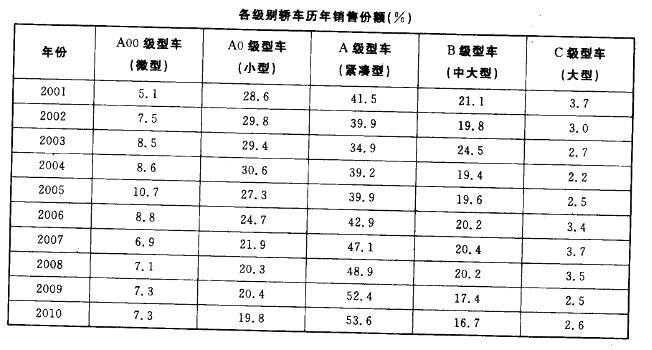
B级型车与C级型车相比,比值最大的年份与比值最小的年份相比,比值相差()。
A. 2. 84 B. 2. 64 C. 3. 56 D. 2. 44答案:C解析:B级型车与C级型车相比,比值最大的年份是2003年,比值为24.5/2.7≈9.1,比值最小的年份是2007年,比值为20.4/3.7≈5. 5,二者之差为9. 1 -5. 5 = 3. 6,与C项最为接近。故正确答案为C。 -
第6题:
沥青混凝土面层集料的最大粒径应与分层压实层厚相匹配。对密级配沥青混合 料和SMA、OGFC等嵌挤型混合料,每层的压实厚度分别不宜小于集料公称最大粒径 的( )倍。
A. 2?2. 5; 2?2. 5 B. 2. 5 ?3; 2. 5 ?3
C. 2. 5?3; 2?2. 5 D. 2?2. 5; 2. 5?3答案:C解析: -
第7题:
已知某企业存货为18万元,流动负债为20万元,速动比率为1.5,假设该企业的流动 资产由速动资产和存货构成,则该企业的流动比率为( )。
A. 2. 4 B. 2. 5 C. 2. 3 D. 2. 6答案:A解析:答案为A。流动比率也称为营运资金比率或真实比率,是指企业流动资产与流 动负债的比率。流动比率的计算公式为:流动比率=流动资产/流动负债。速动资产= 20X 1. 5 = 30(万元);流动资产=30 + 18 = 48(万元);流动比率=48÷20=2. 4。 -
第8题:
巷道与硐室钻眼爆破施工时,当采用气腿式凿岩机钻眼时,炮眼的深度一般取( )。A. 1. 2 ~2. Om
B. 1. 6 ~2. 5m
C. 2. 0~3. Om
D. 2. 5~3. 5m答案:B解析:P86,选B -
第9题:
为了有统一的货币转换基础,《收入会计手册》PartA第12章中特别规定,客票开账货币的转换一般要以( )货币为基础转换成开账货币。
- A、始发国
- B、非始发国
- C、非付款国
- D、付款国
正确答案:D -
第10题:
圆锥斜度是锥度的1/2.()
正确答案:正确 -
第11题:
写出分属于下列科的校园植物。 李亚科1.()2.()3.() 苹果亚科1.()2.()3.() 绣线菊亚科1.()2.() 蔷薇亚科() 十字花科1.()2.() 藜科1.()2.() 蓼科() 堇菜科() 卫矛科() 蝶形花科1.()2.()3.()
正确答案:杏;李;桃;苹果;梨;山楂;珍珠梅;风箱果;玫瑰;独行菜;荠菜;猪毛菜;藜;巴天酸模;早开堇菜;桃叶卫矛;刺槐;紫花苜蓿;披针叶黄华 -
第12题:
单选题为了有统一的货币转换基础,《收入会计手册》PartA第12章中特别规定,客票开账货币的转换一般要以( )货币为基础转换成开账货币。A始发国
B非始发国
C非付款国
D付款国
正确答案: A解析: 暂无解析 -
第13题:
根据如下数据段的定义,说明PLENTH的值为:PARTDW?PNAMDB16DUP(?)COUNTDD?PLENTHEQU$-PART
A、$-PART符号
B、当前地址与PARK地址之间的差值
C、美元符号与PARK符号的差
D、以上三条都不是
参考答案:B
-
第14题:
图示为共发射极单管电压放大电路,估算静态点IB、IC、VCE分别为: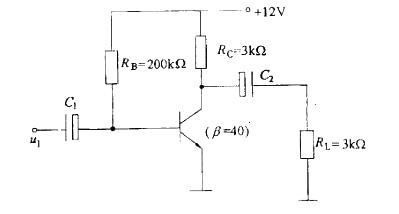 A. 57μA,2. 8mA,3. 5V
B. 57μA,2. 8mA,8V
C. 57μA,4mA,0V
D. 30μA,2. 8mA,3.5V答案:A解析:提示:根据等效的直流通道计算,在直流等效电路中电容断路。 -
第15题:

回归方程中的常数项a为( )。
A. ﹣19. 6 B. ﹣2. 6
C. 2. 6 D. 26答案:C解析:
-
第16题:
振冲置换法桩的间距根据荷载大小和原土的抗剪强度确定,可选用1.5 ~2. 5m, 桩的直径可按每根桩的填料量计算,宜采用()m。
A. 0.8 ~1.2 B. 1.5 ~2. 5
C. 2. 0 ~2. 5 D. 3. 0 ~3. 5答案:A解析: -
第17题:
超前锚杆、小导管支护长度宜为()m,并应大于循环进尺的2倍。
A. 2. 0 ?2. 5 B. 2. 5 ?3. 0
C. 3.0?3. 5 D. 3. 5?4.0答案:C解析: -
第18题:
某国的政治风险评分为2. 7分,经济风险评分为3. 5分,法律风险评分为1. 3分,税收 风险评分为2. 8分,运作风险评分为2. 4分,安全性评分为1. 1分,则使用WMRC的计算方法 得到的国家综合风险是( )。
A. 2. 215 B. 2. 315 C. 2.415 D. 2. 515答案:D解析:。世界市场研究中心(WMRC)的思路是将每个国家六项考虑因素中 的每一项都给出风险评分,分值1?5,1表示最低风险,5表示最高风险。风险评级最小的增 加值是0.5。国家风险的最终衡量是根据权重,综合6个因素打分情况得出。其中政治、经济 风险各占25%的权重,法律和税收各占15%,运作和安全性各占10%。其计算方法为:(2. 7 + 3. 5)X25% + (1. 3 + 2. 8) X 15%+ (2. 4 + 1. 1) X 10% =2. 515。分值为 1. 0 ?1. 24 代表风 险非常小,分值为4. 5?5. 0则代表风险极高。 -
第19题:
证券经纪商向客户收取的佣金不得高于证券交易金额的( )。
A. 0. 3% B. 2. 5%
C. 0.2% D. 2. 8%答案:A解析:证券经纪商向客户收取的佣金(包括代收的证券交易监管费和证券交易所手续费等)不得高于证券交易金额的3‰,也不得低于代收的证券交易监管费和证券交易所手续费等。 -
第20题:
某2年期债券麦考利久期为2. 3年,债券目前价格为105. 00元,市场利率为9%,假设 市场利率突然上升1%,则按照久期公式计算,该债券价格( )。
A.下降 2. 11% B.下降 2. 50%
C.下降2. 22元 D.下降2. 5元
E.上升2. 5元答案:A,C解析:。根据久期计算公式可得,ΔP/P=( -DX Δy)/(l + y) = ( - 2. 3 Xl%)/(l + 9%) = -2. 11%,则 ΔP=-2. ll%X105≈-2.22 元。公式中 P 表示债券价格, ΔP表示债券价格的变化幅度,y表示市场利率,Δy表示市场利率的变化幅度,D选项表示麦 考利久期。 -
第21题:
如果患者为医嘱离院,其病案首页栏目“死亡患者尸检□1.是2.否”的方框内应当填写“2.否”。
正确答案:错误 -
第22题:
在应用文写作中,为做到条理清楚、层次分明,常使用层次序数来标注内容,其顺序排列规则为()
- A、一、(一)2.(2)
- B、(一)一、(2)2.
- C、2.(2)一(一)
- D、(2)2.(一)一、
正确答案:A -
第23题:
写出分属于下列科的校园植物。 石竹科() 茄科() 唇形科1.()2.() 紫草科1.()2.() 木樨科() 百合科1.()2.() 禾本科1.()2.()3.()
正确答案:王不留行;矮牵牛;夏至草;黄芩;紫筒草;东北鹤虱;紫丁香;小黄花;葱;草地早熟禾;狗尾草;小麦 -
第24题:
填空题写出分属于下列科的校园植物。 石竹科() 茄科() 唇形科1.()2.() 紫草科1.()2.() 木樨科() 百合科1.()2.() 禾本科1.()2.()3.()正确答案: 王不留行,矮牵牛,夏至草,黄芩,紫筒草,东北鹤虱,紫丁香,小黄花,葱,草地早熟禾,狗尾草,小麦解析: 暂无解析