
判断题Currently, there are about two thirds of the world’s population living in countries where water supply falls short of consumption.A 对B 错
题目
对
错
相似考题
更多“判断题Currently, there are about two thirds of the world’s population living in countries where water supply falls short of consumption.A 对B 错”相关问题
-
第1题:
Australia is the world's smallest continent and largest island, a relatively young nation established in an ancient land. Its development represents a triumph(胜利)over remoteness and a harsh landscape.
It is generally accepted that Australia's original inhabitants, the aboriginal(土著的)people, have lived on the continent for 40,000 to 60,000 years. They were also its sole(唯一的)human inhabitants until two centuries ago. Indonesian traders probably visited Australia's northwest but it was unknown to the rest of the world until the 1600s. A huge south land appeared on maps before 200 AD but its existence was not confirmed until the 17th century when Portuguese, Spanish and Dutch merchants ventured into Asia.
The first European settlement of the continent--by the British--began in 1788, on the site now occupied by Sydney, Australia's largest city. There were then about 1500 Europeans and an estimated 300,000 aboriginal people in Australia. The population has reached 2.25 million by 1881, 5.41 million by 1921 and 7.4 million by the end of World War II(1945). It increased sharply, partly because of a large postwar immigration program, and reached more than 17 million in 1991, despite a decline that began in the 1970s in the natural increase and net immigration. The rate of population increase in the 40 years after world war II, about two percent, has halved.
Australia is one of the most urbanized countries in the world, with about 70 percent of the population living in the 10 largest cities. Australians have a high standard of living by world standards. The flag of Australia is the only one to fly over a whole continent in the world. The small Union Jack represents the historical link with Britain, the largest star has six points for each of the states and one point for the territories, and the small stars form. the Southern Cross - a prominent of the southern hemisphere night sky.
1. The passage is written to _____.
A. present a general picture of Australia
B. persuade people to travel in Australia
C. tell people the history of Australia
D. describe the characteristic of Australia
2. The first sentence in paragraph 1 mainly suggests that _____.
A. Australia is a strange country
B. it is not easy to find Australia
C. Australia has contradictory(矛盾的)features
D. Australia is a continent and a country as well
3. Which statement about Australia's population can NOT be inferred? _____
A. The population change is a gradual increase.
B. The population increased rapidly for a time owing to the government's special policy.
C. The rates of population increase in different periods varied.
D. The rate of population increase before World War II was about one percent.
4. The word urbanized means _____.
A. of towns or cities
B. of emergency
C. of suburbs
D. of the countryside
5. Which of the following statements is NOT true? _____
A. The large star on the flag of Australia has seven points.
B. People were certain of Australia's existence before 200 AD because it had appeared on maps.
C. Australia enjoy relatively high standard of living compared with people in other countries.
D. The aboriginal people of Australia were its only human inhabitants before the 18th century.
参考答案: ACDAB
-
第2题:
About ________ of the workers in the factory were born in the ________.
A.two-thirds, 1970 B.two-thirds, 1970s C.two-third,1970 D.two-third, 1970s
正确答案:B
-
第3题:
Passage ThreeQuestions 31 to 35 are based on the following passage.
An understanding of man's effect on the balance of nature is crucial (关键的) to being able to find the appropriate remedial action. It is a very common belief that the problems of the population explosion are caused mainly by poor people living in poor countries who do not know enough to limit their reproduction. This is not true. The actual number of people in an area is not as important as the effect they have on nature. Developing countries do have an effect on their environment, but it is the populations of richer countries that have a far greater impact on the earth as a whole.
For example, tropical forests are known to be essential to the balance of nature, yet we are destroying them at a great rate. They are being cleared not to benefit the natives of that country, but to satisfy the needs of rich countries. Central American forests are being destroyed for grassland to make pet food in the United States cheaper; in Papua slew Guinea, forests are destroyed to supply cheaper cardboard packaging for Japanese electronic products; in Burma and Thailand, forests have been destroyed to produce more attractive furniture in Singapore and Hong Kong. Therefore, a rich person living thousands of miles away may cause more tropical forest destruction than a poor person living in the forest itself.
In short, it is everybody's duty to safeguard the future of mankind—not only through population control, but by being more aware of the effect his actions have on nature. Nature is both fragile and powerful. It is very easily destroyed; on the other hand, it can easily destroy its most dangerous enemy—man.
31.According to the first paragraph, people usually believe that .
A.poor people in poor countries contribute to the imbalance of nature
B. rich people know how to protect the environment by taking actions
C. people in poor areas know a lot about the birth control
D. rich people in rich countries have done a lot to balance nature
正确答案:A
-
第4题:
By saying "the world has been spared a t.rue water war" (Line 1, Para.4), the author means( )
[A] the water supply in the world is more than needed
[B] the world has saved enough water to avoid the war
[C] the world has never suffered a war triggered by water
[D] the world spares no effort to avoid a war caused by water
正确答案:C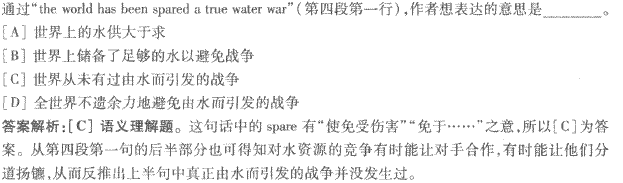
-
第5题:
12. About_______ of the workers in the factory were born in the __________.
A. two- thirds;1970
B. two- thirds ; 1970s
C. two-third ; 1970
D. two-third ; 1970s
正确答案:B
12.B【解析】句意:工厂里大约2/3的工人出生在20世纪70年代。分数的表达为分子用基数词,分母用序数词,如果分子大于1,则分母要用复数,排除C、D,年代的表达要在年份后加s.故选B。 -
第6题:
共用题干
Water一the Issue of This Century
The world is running short of freshwater. Populations are growing bigger and thirstier (渴的),with the result that freshwater is becoming increasingly scarce(缺乏).Half the world's wetlands have disappeared during the last century,while estimates suggest that wa- ter use will rise by 50% in the next 30 years.
The World Bank report estimates that as much as half of the world's population,concentrated in Africa,the Middle East and south Asia,will face“severe water shortages”by 2025.Local water conflicts and the loss of freshwater ecosystems appear large in some re- gions.
A similar picture emerges from the globe's salt water regions. Three-quarters of the world's people may live within 100km of the sea in 2025,putting even more pressure on stretched coastal ecosystems. Two thirds of fisheries(渔业)are exploited at or beyond their sustainable limits, and half the world's coral reefs(珊瑚礁)may perish in 100 years. Almost 60% of coral reefs and 34% of fish species are at risk from human activities,the Bank says.
The report concludes that there is ample evidence to justify immediate and coordinated action to safeguard supplies and use water more efficiently.
Fresh water consumption is rising quickly,and the availability of water in some regions is likely to become one of the most pressing issues of the 21st century.
A third of the world's popu1ation一around two billion people一live in countries that are experiencing moderate to high water shortages.That proportion could rise to half or more in the next 30 years unless institutions(制度)change to ensure better conservation and alloca- tion of water.
China is one country where the portents(征兆)are gloomy. The most waterstressed country in East Asia,China is exploiting 44%of its usable water,a figure projected to rise to6O%by 2020.Primary withdrawal of water of more than 60%is widely considered by water experts to exceed the environmental carrying capacity of a river basin system. Although
China's total use appears still to be reasonable,it has several basins that are severely stressed environmentally.
Withdrawals exceed environmental limits in Afghanistan and Pakistan,and will exceed them in India by 2020.In the Middle East and North Africa,only Morocco has unexploited water resources.The rest have exceeded environmental limits and many are mining aquifers (蓄水层)一bodies of water-bearing rock一the report says.India exceeds environmental limits for water use.
A: Right
B: Wrong
C: Not mentioned答案:B解析:题干意为“据估计,30年以后水的使用量将增加50%”。利用题干中的细节 信息词/短语water use, 50% , next 30 years作为定位线索,在短文第一段中寻找到相关句: The world is running short of fresh water. Populations are growing bigger and thirstier(渴 的),with the result that freshwater is becoming increasingly scarce(缺乏).Half the world's wetlands have disappeared during the last century,while estimates suggest that water use will rise by 50% in the next 30 years.相关句(带下划线的句子)意为“在上个世纪的100年里世界上一半的沼泽地已经消失了,而依据人们的估计来看,30年后水的使用量将增加50%”, 很明显题干陈述的意义与短文中的相关内容一致,因此题干陈述了正确的信息。所以答案为A。
题干意为“大多数发达国家20年以后将面临水的短缺问题”。利用题干中 的细节信息词/短语most developed countries, water shortages, in 20 years作为定位线索, 结果发现most developed countries根本没有在短文中出现,短文中也没有具体提到发达国家水短缺的情况,因此题干陈述的信息是短文中未提及的信息。所以答案为C。
题干意为“到了2025年,地球上大多数的人可能会生活在距离海洋100公 里的范围里”。利用题干中的细节信息短语most of the world's population, 100km of the sea, in 2025作为定位线索,这样在第三段中找到相关句:A similar picture emerges from the globe's salt water regions. Three-quarters of the world's people(与题干中的most of the world's population呼应)may live within 100km of the sea in 2025 , putting even more pressure on stretched coastal ecosystems. Two thirds of fisheries(渔业)are exploited at or beyond their sustainable limits, and half the world's coral reefs(珊瑚礁)may perish in 100 years.Almost 60% of coral reefs and 34% of fish species are at risk from human activities, the Bank says.相关句(第三段第二句)提到“到2025年,世界上3/4的人将可能生活在距离海洋100公里的范围里”,显然题干陈述的意义与短文相关内容一致。所以答案为A。到目前为 止,在完成的3道题的答案里出现了2个A,1个C,剩下的4道题肯定至少会出现1-3个 B,因此如果考虑节约答题时间,剩下的4小题全选B,这样在该阅读理解题上就通过完成3 小题而直接拿到5小题的分数(即拿到5分!)
题干意为“几乎所有的珊瑚礁都可能在10。年后消失”。利用题干中的细节 信息短语almost all coral reefs, in 100 years作为定位线索,这样在第三段中找到相关句:A similar picture emerges from the globe's salt water regions. Three-quarters of the world's people may live within 100km of the sea in 2025,putting even more pressure on stretched coastal ecosystems. Two thirds of fisheries(渔业)are exploited at or beyond their sustainable limits,and half the world's coral reefs(珊瑚礁)may perish in 100 years.Almost 60% of coral reefs and 34% of fish species are at risk from human activities, the Bank says.相关句(第三段倒数第二句)意为“2/3的渔业开发已经处于可承受的边缘,甚至超出了可承受的范围,世界上一半的珊瑚礁可能会在100年后消失”。短文提到“一半的珊瑚礁”可能会在100年后消失,而不是“几乎所有的珊瑚礁”可能会在100年后消失,因此题干陈述的信息与短文内 容不一致。所以答案为B。
题干意为“大西洋中的一些鱼类正处于危险的状况中”。利用题干中的细节 信息词/短语some species of fish, Atlantic, dangerously low levels作为定位线索,在第三段 中寻找到相关句:A similar picture emerges from the globe's salt water regions. Three-quarters of the world's people may live within 100km of the sea in 2025,putting even more pressure on stretched coastal ecosystems. Two thirds of fisheries(渔业) are exploited at or beyond their sustainable limits,and half the world's coral reefs(珊瑚礁)may perish in 100 years. Almost 60% of coral reefs and 34% of fish species are at risk from human activities, the Bank says.相关句(带下划线的句子)提到“世界银行说几乎有60%的珊瑚礁和34%的鱼 类因为人类的活动而处于危险的状况中”,这个句子陈述的是全世界鱼类的情况,至于在大西洋是否也是这样,该句中没有提到,依据该句意义也无法推断出大西洋地区鱼类的情况。短文中的其他句子没有再提及鱼类的情况,由此可判断出题干陈述的信息是短文中未提及的信 息。所以答案为C。
题干意为“世界银行的报告意味着应该采取紧急行动来保护水资源的供 应”。利用题干中的细节信息词/短语the World Bank report, urgent action, water supplies 作为定位线索,在第四段中寻找到相关句:The report(指上文中提到的世界银行的报告) concludes that there is ample evidence to justify immediate and coordinated action to safe- guard supplies and use water more efficiently.第四段是一个独立成段句,该段意为“那份报告得出的结论是有大量的证据证明应该立刻采取协调一致的行动来保护水资源的供应,并更有效地使用水资源”。显然题干陈述的意义与短文中的相关意义一致,因此答案为A。
题干意为“印度(现在)超过了水资源的环境使用极限”。利用题干中的细节 信息词/短语India , environmental limits , water use作为定位线索,在最后一段中寻找到相关句:Withdrawals(与上文中提到的withdrawal of water<水资源的使用>呼应)exceed environmental limits in Afghanistan and Pakistan,and will exceed them in India by 2020.In the -
第7题:
共用题干
Water一the Issue of This Century
The world is running short of freshwater. Populations are growing bigger and thirstier (渴的),with the result that freshwater is becoming increasingly scarce(缺乏).Half the world's wetlands have disappeared during the last century,while estimates suggest that wa- ter use will rise by 50% in the next 30 years.
The World Bank report estimates that as much as half of the world's population,concentrated in Africa,the Middle East and south Asia,will face“severe water shortages”by 2025.Local water conflicts and the loss of freshwater ecosystems appear large in some re- gions.
A similar picture emerges from the globe's salt water regions. Three-quarters of the world's people may live within 100km of the sea in 2025,putting even more pressure on stretched coastal ecosystems. Two thirds of fisheries(渔业)are exploited at or beyond their sustainable limits, and half the world's coral reefs(珊瑚礁)may perish in 100 years. Almost 60% of coral reefs and 34% of fish species are at risk from human activities,the Bank says.
The report concludes that there is ample evidence to justify immediate and coordinated action to safeguard supplies and use water more efficiently.
Fresh water consumption is rising quickly,and the availability of water in some regions is likely to become one of the most pressing issues of the 21st century.
A third of the world's popu1ation一around two billion people一live in countries that are experiencing moderate to high water shortages.That proportion could rise to half or more in the next 30 years unless institutions(制度)change to ensure better conservation and alloca- tion of water.
China is one country where the portents(征兆)are gloomy. The most waterstressed country in East Asia,China is exploiting 44%of its usable water,a figure projected to rise to6O%by 2020.Primary withdrawal of water of more than 60%is widely considered by water experts to exceed the environmental carrying capacity of a river basin system. Although
China's total use appears still to be reasonable,it has several basins that are severely stressed environmentally.
Withdrawals exceed environmental limits in Afghanistan and Pakistan,and will exceed them in India by 2020.In the Middle East and North Africa,only Morocco has unexploited water resources.The rest have exceeded environmental limits and many are mining aquifers (蓄水层)一bodies of water-bearing rock一the report says.Most developed countries will face water shortages in 20 years.
A: Right
B: Wrong
C: Not mentioned答案:C解析:题干意为“据估计,30年以后水的使用量将增加50%”。利用题干中的细节 信息词/短语water use, 50% , next 30 years作为定位线索,在短文第一段中寻找到相关句: The world is running short of fresh water. Populations are growing bigger and thirstier(渴 的),with the result that freshwater is becoming increasingly scarce(缺乏).Half the world's wetlands have disappeared during the last century,while estimates suggest that water use will rise by 50% in the next 30 years.相关句(带下划线的句子)意为“在上个世纪的100年里世界上一半的沼泽地已经消失了,而依据人们的估计来看,30年后水的使用量将增加50%”, 很明显题干陈述的意义与短文中的相关内容一致,因此题干陈述了正确的信息。所以答案为A。
题干意为“大多数发达国家20年以后将面临水的短缺问题”。利用题干中 的细节信息词/短语most developed countries, water shortages, in 20 years作为定位线索, 结果发现most developed countries根本没有在短文中出现,短文中也没有具体提到发达国家水短缺的情况,因此题干陈述的信息是短文中未提及的信息。所以答案为C。
题干意为“到了2025年,地球上大多数的人可能会生活在距离海洋100公 里的范围里”。利用题干中的细节信息短语most of the world's population, 100km of the sea, in 2025作为定位线索,这样在第三段中找到相关句:A similar picture emerges from the globe's salt water regions. Three-quarters of the world's people(与题干中的most of the world's population呼应)may live within 100km of the sea in 2025 , putting even more pressure on stretched coastal ecosystems. Two thirds of fisheries(渔业)are exploited at or beyond their sustainable limits, and half the world's coral reefs(珊瑚礁)may perish in 100 years.Almost 60% of coral reefs and 34% of fish species are at risk from human activities, the Bank says.相关句(第三段第二句)提到“到2025年,世界上3/4的人将可能生活在距离海洋100公里的范围里”,显然题干陈述的意义与短文相关内容一致。所以答案为A。到目前为 止,在完成的3道题的答案里出现了2个A,1个C,剩下的4道题肯定至少会出现1-3个 B,因此如果考虑节约答题时间,剩下的4小题全选B,这样在该阅读理解题上就通过完成3 小题而直接拿到5小题的分数(即拿到5分!)
题干意为“几乎所有的珊瑚礁都可能在10。年后消失”。利用题干中的细节 信息短语almost all coral reefs, in 100 years作为定位线索,这样在第三段中找到相关句:A similar picture emerges from the globe's salt water regions. Three-quarters of the world's people may live within 100km of the sea in 2025,putting even more pressure on stretched coastal ecosystems. Two thirds of fisheries(渔业)are exploited at or beyond their sustainable limits,and half the world's coral reefs(珊瑚礁)may perish in 100 years.Almost 60% of coral reefs and 34% of fish species are at risk from human activities, the Bank says.相关句(第三段倒数第二句)意为“2/3的渔业开发已经处于可承受的边缘,甚至超出了可承受的范围,世界上一半的珊瑚礁可能会在100年后消失”。短文提到“一半的珊瑚礁”可能会在100年后消失,而不是“几乎所有的珊瑚礁”可能会在100年后消失,因此题干陈述的信息与短文内 容不一致。所以答案为B。
题干意为“大西洋中的一些鱼类正处于危险的状况中”。利用题干中的细节 信息词/短语some species of fish, Atlantic, dangerously low levels作为定位线索,在第三段 中寻找到相关句:A similar picture emerges from the globe's salt water regions. Three-quarters of the world's people may live within 100km of the sea in 2025,putting even more pressure on stretched coastal ecosystems. Two thirds of fisheries(渔业) are exploited at or beyond their sustainable limits,and half the world's coral reefs(珊瑚礁)may perish in 100 years. Almost 60% of coral reefs and 34% of fish species are at risk from human activities, the Bank says.相关句(带下划线的句子)提到“世界银行说几乎有60%的珊瑚礁和34%的鱼 类因为人类的活动而处于危险的状况中”,这个句子陈述的是全世界鱼类的情况,至于在大西洋是否也是这样,该句中没有提到,依据该句意义也无法推断出大西洋地区鱼类的情况。短文中的其他句子没有再提及鱼类的情况,由此可判断出题干陈述的信息是短文中未提及的信 息。所以答案为C。
题干意为“世界银行的报告意味着应该采取紧急行动来保护水资源的供 应”。利用题干中的细节信息词/短语the World Bank report, urgent action, water supplies 作为定位线索,在第四段中寻找到相关句:The report(指上文中提到的世界银行的报告) concludes that there is ample evidence to justify immediate and coordinated action to safe- guard supplies and use water more efficiently.第四段是一个独立成段句,该段意为“那份报告得出的结论是有大量的证据证明应该立刻采取协调一致的行动来保护水资源的供应,并更有效地使用水资源”。显然题干陈述的意义与短文中的相关意义一致,因此答案为A。
题干意为“印度(现在)超过了水资源的环境使用极限”。利用题干中的细节 信息词/短语India , environmental limits , water use作为定位线索,在最后一段中寻找到相关句:Withdrawals(与上文中提到的withdrawal of water<水资源的使用>呼应)exceed environmental limits in Afghanistan and Pakistan,and will exceed them in India by 2020.In the -
第8题:
问答题Practice 4 You should spend about 20 minutes on this task. The table below gives information about past and projected population figures in various countries for different years. Summarise the information by selecting and reporting the main features, and make comparisons where relevant. Write at least 150 words. Population (millions)正确答案: 【参考范文】
The chart shows population figures for four countries from 1990 to 2000 and projected growth for 2020 and 2050.
The country with the lowest population and the lowest projected growth rate is New Zealand with 3.4m in 1990 rising to 3.8m in2000 and expected to increase to 4.7m in 2050. The United States has a similar growth rate but a much larger population, starting at249.9m in 1990, reaching 275.1 m in 2000 and anticipated to increase by almost 100m over the 60 year period.
Canada's population rose from 26.6m to 31.0m between 1990 and 2000 and is expected to have increased by 50% from where it was in 1990 by 2050. The highest growth rate occurs in Australia where the population grew by 2.1m to reach 19.2m in 2000 and is predicted to reach 26 million by 2050.
Overall, the countries represented had, and are forecast to have, fairly stable rates of growth over the time period although their total populations differ markedly.解析: 暂无解析 -
第9题:
问答题Pollution 1)Pollution is a problem because man, in an increasingly populated and industrialized world,is upsetting the environment in which he lives. 2) Many scientists maintain that one of man's greatest errors has been to equate growth with advancement. 3) Now “growth” industries are being looked on with suspicion incase their side effects damage the environment and disrupt the relationship of different forms of life. 4) The growing population makes increasing demands on the world’s fixed supply of air, water and land. 5) This rise in population is accompanied by the desire of more and more people for a better standard of living. 6) The problem has been causing increasing concern to living things and their environment.正确答案:
污染 污染已成为问题,因为在当今人口越来越多,社会越来越工业化的世界上,人类正在污染他们居住的环境。2)许多科学家认为人类最大的错误是把发展和进步等同起来。3)现在人们以怀疑的态度看待“发展性”的产业,因为它们的副作用会破坏环境,破坏各种生命之间的关系。4)人口的增长导致对世界上有限的空气、水和土地的需求不断增长。5)伴随着人口增长的是越来越多的人渴望更高的生活水平。6)这个问题已经引起人们时生物及其环境的日益关注。解析: 暂无解析 -
第10题:
问答题Pollution is a problem because man, in an increasingly populated and industrialized world, is upsetting the environment in which he lives. Many scientists maintain that one of man’s greatest errors has been to equate growth with advancement. Now “growth” industries are being looked on with suspicion in case their side effects damage the environment and disrupt the relationship of different forms of life, the growing population makes increasing demands on the world’s fixed supply of air, water and land.正确答案:
污染已成为问题,因为在当今人口越来越多,社会越来越工业化的世界上,人类正在污染他们居住的环境。许多科学家认为人类最大的错误是把发展和进步等同起来。现在人们以怀疑的态度看待“发展性”的产业,因为它们的副作用会破坏环境,破坏各种生命之间的关系。人口的增长导致对世界上有限的空气、水和土地的需求不断增长。解析: 暂无解析 -
第11题:
问答题Practice 5 Water is essential for life. Yet many millions of people around the world face water shortages. Many millions of children die every year from water-borne diseases. And drought regularly afflicts some of the world’s poorest countries. The world needs to respond much better. We need to increase water efficiency, especially in agriculture. We need to free women and girls from the daily chore of hauling water. We must involve leaders of countries in decision-making on water management. We need to make sanitation a priority. This is where progress is lagging most. And we must show that water resources need not be a source of conflict. Instead, they can be a catalyst for cooperation. Significant gains have been made. But a major effort is still required. Our goal is to meet the internationally agreed targets for water and sanitation by 2015, and to build the foundation for further progress in the years beyond. This is an urgent matter of human development, and human dignity. Together, we can provide safe, clean water to the entire world’s people. The world’s water resources are our lifeline for survival, and [or sustainable development in the 21st century. Together, we must manage them better.正确答案: 【参考译文】
水对生命是至关重要的,然而世界各地数以百万计的人们却面临着水源短缺的问题。每年有数百万儿童由于水传播的疾病而死亡,世界上某些最贫穷的国家经常遭受干旱的折磨。
世界需要更好地应对这一挑战。我们需要提高用水效率,特别是在农业方面;我们需要把女性从每日提水的家务中解放出来;我们必须使国家领导人参与水源管理的决策;我们需要优先考虑公共卫生,而这方面的进展尤为缓慢;我们必须指出水资源不应成为冲突之源,而应成为合作的催化剂。
我们已取得了显著进展,但仍需付出巨大努力。我们的目标是:要达到国际社会协商规定的2015年前要达到的水和卫生方面的目标,并为以后的进展奠定基础。
这是一个关乎人类发展和尊严的紧迫问题;如果齐心协力,我们可以为全世界人民提供安全、清洁的水。水资源是我们赖以生存的生命线,也是21世纪可持续发展的生命线;我们必须共同努力,更好地管理水资源。解析: 暂无解析 -
第12题:
问答题Pollution is a problem because man, in an increasingly populated and industrialized world, is upsetting the environment in which he lives. Many scientists maintain that one of man’s greatest errors has been to equate growth with advancement. Now “growth” industries are being looked on with suspicion in case their side effects damage the environment and disrupt the relationship of different forms of life. The growing population makes increasing demands on the world’s fixed supply of air, water and land. This rise in population is accompanied by the desire of more and more people for a better standard of living. Thus still greater demands for electricity, water and goods result in an ever increasing amount of waste material to be disposed of.The problem has been causing increasing concern to living things and their environment. Many believe that man is not solving these problems quickly enough and that his selfish pursuit of possessions takes him past the point of no return before be fully appreciates the damage.正确答案:
污染已成为问题,因为在当今人口越来越多,社会越来越工业化的世界上,人类正在污染他们居住的环境。许多科学家认为人类最大的错误是把发展和进步等同起来。现在人们以怀疑的态度看待“发展性”的产业,因为它们的副作用会破坏环境,破坏各种生命之间的关系。人口的增长导致对世界上有限的空气、水和土地的需求不断增长。伴随着人口增长的是越来越多的人渴望更高的生活水平。于是对电、水和商品的更大需求必然造成有更多的废物要处理。这个问题已经引起人们对生物及其环境的日益关注。许多人认为,人类没有尽快地解决这一问题,却只顾谋求私利,以致于到了无可挽救的地步以后才充分认识到这种损害。解析: 暂无解析 -
第13题:
Which of the following is TRUE according to the passage?
A.Americans used to get access to the Internet easily.
B.The world’sTV sets will total 150million by 2013.
C.45% of families in the developing countries had a TV in 2005.
D.Over two thirds of families in the world will have a TV by 2013.
正确答案:D
-
第14题:
By the middle of the 21st century,the vast majority of the world‘s population will be living in cities _______ in the country. A. other than B. more than C. better than D. rather than
正确答案:D
rather than:与其…(不如);不是…(而是)。句意:到二十一世纪中叶,世界上大多数人口将生活在城市而不是农村。 (本解析由学员提供) -
第15题:
In the author's opinion, __.
A. developing countries should be responsible for environmental problems
B. overpopulation in the world is created by the developed countries
C. rich countries exercise worse influence on environment than poor countries
D. all countries should bring the population growth under control
正确答案:C
-
第16题:
By citing the fact that "the number had shrunk to 39 out of 220" ( Line 3-4, Para.2), the author sug- gests that _______.( )
[A] the poverty in the middle-income countries is alleviated tremendously
[B] the life of children in the middle-income countries has become better
[C] poor people's living conditions don't change although the number reduced
[D] the financial aid to the world's poorest countries achieves great success
正确答案:C
作者引用“220个国家中,低收入国家的数目降到了39个”这一事实是为了表明____。
[A]中等收入国家的贫困状况得到了极大缓解
[B]中等收入国家的儿童生活有了改善
[C]尽管低收入国家的数目降低了,但是贫困人口的生活状况没有改变
[D]对世界上最贫困国家的经济援助取得了很大的成功
答案解析:[C]推理判断题。文章第二段作者引用了世界银行的分类数据,通过数字可以看出低收入国家在不断减少,但在下文当中,作者又通过新的数据信息,向读者阐明,尽管这些国家成为了中等收入国家,但是“中等收入国家所占的全球穷人比例增加了2倍”,也就是说贫穷问题并没有在根本上得到解决,而是愈演愈烈,因此可以判断[A]错误,[C]表述正确;在第二段末尾,作者提出“世界上70%的营养不良儿童生长在中等收入国家”,因此[B]错误;[D]也与文章内容不符,排除。 -
第17题:
共用题干
Water一the Issue of This Century
The world is running short of freshwater. Populations are growing bigger and thirstier (渴的),with the result that freshwater is becoming increasingly scarce(缺乏).Half the world's wetlands have disappeared during the last century,while estimates suggest that wa- ter use will rise by 50% in the next 30 years.
The World Bank report estimates that as much as half of the world's population,concentrated in Africa,the Middle East and south Asia,will face“severe water shortages”by 2025.Local water conflicts and the loss of freshwater ecosystems appear large in some re- gions.
A similar picture emerges from the globe's salt water regions. Three-quarters of the world's people may live within 100km of the sea in 2025,putting even more pressure on stretched coastal ecosystems. Two thirds of fisheries(渔业)are exploited at or beyond their sustainable limits, and half the world's coral reefs(珊瑚礁)may perish in 100 years. Almost 60% of coral reefs and 34% of fish species are at risk from human activities,the Bank says.
The report concludes that there is ample evidence to justify immediate and coordinated action to safeguard supplies and use water more efficiently.
Fresh water consumption is rising quickly,and the availability of water in some regions is likely to become one of the most pressing issues of the 21st century.
A third of the world's popu1ation一around two billion people一live in countries that are experiencing moderate to high water shortages.That proportion could rise to half or more in the next 30 years unless institutions(制度)change to ensure better conservation and alloca- tion of water.
China is one country where the portents(征兆)are gloomy. The most waterstressed country in East Asia,China is exploiting 44%of its usable water,a figure projected to rise to6O%by 2020.Primary withdrawal of water of more than 60%is widely considered by water experts to exceed the environmental carrying capacity of a river basin system. Although
China's total use appears still to be reasonable,it has several basins that are severely stressed environmentally.
Withdrawals exceed environmental limits in Afghanistan and Pakistan,and will exceed them in India by 2020.In the Middle East and North Africa,only Morocco has unexploited water resources.The rest have exceeded environmental limits and many are mining aquifers (蓄水层)一bodies of water-bearing rock一the report says.Most of the world's population may live within 100km of the sea in 2025.
A: Right
B: Wrong
C: Not mentioned答案:A解析:题干意为“据估计,30年以后水的使用量将增加50%”。利用题干中的细节 信息词/短语water use, 50% , next 30 years作为定位线索,在短文第一段中寻找到相关句: The world is running short of fresh water. Populations are growing bigger and thirstier(渴 的),with the result that freshwater is becoming increasingly scarce(缺乏).Half the world's wetlands have disappeared during the last century,while estimates suggest that water use will rise by 50% in the next 30 years.相关句(带下划线的句子)意为“在上个世纪的100年里世界上一半的沼泽地已经消失了,而依据人们的估计来看,30年后水的使用量将增加50%”, 很明显题干陈述的意义与短文中的相关内容一致,因此题干陈述了正确的信息。所以答案为A。
题干意为“大多数发达国家20年以后将面临水的短缺问题”。利用题干中 的细节信息词/短语most developed countries, water shortages, in 20 years作为定位线索, 结果发现most developed countries根本没有在短文中出现,短文中也没有具体提到发达国家水短缺的情况,因此题干陈述的信息是短文中未提及的信息。所以答案为C。
题干意为“到了2025年,地球上大多数的人可能会生活在距离海洋100公 里的范围里”。利用题干中的细节信息短语most of the world's population, 100km of the sea, in 2025作为定位线索,这样在第三段中找到相关句:A similar picture emerges from the globe's salt water regions. Three-quarters of the world's people(与题干中的most of the world's population呼应)may live within 100km of the sea in 2025 , putting even more pressure on stretched coastal ecosystems. Two thirds of fisheries(渔业)are exploited at or beyond their sustainable limits, and half the world's coral reefs(珊瑚礁)may perish in 100 years.Almost 60% of coral reefs and 34% of fish species are at risk from human activities, the Bank says.相关句(第三段第二句)提到“到2025年,世界上3/4的人将可能生活在距离海洋100公里的范围里”,显然题干陈述的意义与短文相关内容一致。所以答案为A。到目前为 止,在完成的3道题的答案里出现了2个A,1个C,剩下的4道题肯定至少会出现1-3个 B,因此如果考虑节约答题时间,剩下的4小题全选B,这样在该阅读理解题上就通过完成3 小题而直接拿到5小题的分数(即拿到5分!)
题干意为“几乎所有的珊瑚礁都可能在10。年后消失”。利用题干中的细节 信息短语almost all coral reefs, in 100 years作为定位线索,这样在第三段中找到相关句:A similar picture emerges from the globe's salt water regions. Three-quarters of the world's people may live within 100km of the sea in 2025,putting even more pressure on stretched coastal ecosystems. Two thirds of fisheries(渔业)are exploited at or beyond their sustainable limits,and half the world's coral reefs(珊瑚礁)may perish in 100 years.Almost 60% of coral reefs and 34% of fish species are at risk from human activities, the Bank says.相关句(第三段倒数第二句)意为“2/3的渔业开发已经处于可承受的边缘,甚至超出了可承受的范围,世界上一半的珊瑚礁可能会在100年后消失”。短文提到“一半的珊瑚礁”可能会在100年后消失,而不是“几乎所有的珊瑚礁”可能会在100年后消失,因此题干陈述的信息与短文内 容不一致。所以答案为B。
题干意为“大西洋中的一些鱼类正处于危险的状况中”。利用题干中的细节 信息词/短语some species of fish, Atlantic, dangerously low levels作为定位线索,在第三段 中寻找到相关句:A similar picture emerges from the globe's salt water regions. Three-quarters of the world's people may live within 100km of the sea in 2025,putting even more pressure on stretched coastal ecosystems. Two thirds of fisheries(渔业) are exploited at or beyond their sustainable limits,and half the world's coral reefs(珊瑚礁)may perish in 100 years. Almost 60% of coral reefs and 34% of fish species are at risk from human activities, the Bank says.相关句(带下划线的句子)提到“世界银行说几乎有60%的珊瑚礁和34%的鱼 类因为人类的活动而处于危险的状况中”,这个句子陈述的是全世界鱼类的情况,至于在大西洋是否也是这样,该句中没有提到,依据该句意义也无法推断出大西洋地区鱼类的情况。短文中的其他句子没有再提及鱼类的情况,由此可判断出题干陈述的信息是短文中未提及的信 息。所以答案为C。
题干意为“世界银行的报告意味着应该采取紧急行动来保护水资源的供 应”。利用题干中的细节信息词/短语the World Bank report, urgent action, water supplies 作为定位线索,在第四段中寻找到相关句:The report(指上文中提到的世界银行的报告) concludes that there is ample evidence to justify immediate and coordinated action to safe- guard supplies and use water more efficiently.第四段是一个独立成段句,该段意为“那份报告得出的结论是有大量的证据证明应该立刻采取协调一致的行动来保护水资源的供应,并更有效地使用水资源”。显然题干陈述的意义与短文中的相关意义一致,因此答案为A。
题干意为“印度(现在)超过了水资源的环境使用极限”。利用题干中的细节 信息词/短语India , environmental limits , water use作为定位线索,在最后一段中寻找到相关句:Withdrawals(与上文中提到的withdrawal of water<水资源的使用>呼应)exceed environmental limits in Afghanistan and Pakistan,and will exceed them in India by 2020.In the -
第18题:
共用题干
Water一the Issue of This Century
The world is running short of freshwater. Populations are growing bigger and thirstier (渴的),with the result that freshwater is becoming increasingly scarce(缺乏).Half the world's wetlands have disappeared during the last century,while estimates suggest that wa- ter use will rise by 50% in the next 30 years.
The World Bank report estimates that as much as half of the world's population,concentrated in Africa,the Middle East and south Asia,will face“severe water shortages”by 2025.Local water conflicts and the loss of freshwater ecosystems appear large in some re- gions.
A similar picture emerges from the globe's salt water regions. Three-quarters of the world's people may live within 100km of the sea in 2025,putting even more pressure on stretched coastal ecosystems. Two thirds of fisheries(渔业)are exploited at or beyond their sustainable limits, and half the world's coral reefs(珊瑚礁)may perish in 100 years. Almost 60% of coral reefs and 34% of fish species are at risk from human activities,the Bank says.
The report concludes that there is ample evidence to justify immediate and coordinated action to safeguard supplies and use water more efficiently.
Fresh water consumption is rising quickly,and the availability of water in some regions is likely to become one of the most pressing issues of the 21st century.
A third of the world's popu1ation一around two billion people一live in countries that are experiencing moderate to high water shortages.That proportion could rise to half or more in the next 30 years unless institutions(制度)change to ensure better conservation and alloca- tion of water.
China is one country where the portents(征兆)are gloomy. The most waterstressed country in East Asia,China is exploiting 44%of its usable water,a figure projected to rise to6O%by 2020.Primary withdrawal of water of more than 60%is widely considered by water experts to exceed the environmental carrying capacity of a river basin system. Although
China's total use appears still to be reasonable,it has several basins that are severely stressed environmentally.
Withdrawals exceed environmental limits in Afghanistan and Pakistan,and will exceed them in India by 2020.In the Middle East and North Africa,only Morocco has unexploited water resources.The rest have exceeded environmental limits and many are mining aquifers (蓄水层)一bodies of water-bearing rock一the report says.Almost all coral reefs may disappear in 100 years.
A: Right
B: Wrong
C: Not mentioned答案:B解析:题干意为“据估计,30年以后水的使用量将增加50%”。利用题干中的细节 信息词/短语water use, 50% , next 30 years作为定位线索,在短文第一段中寻找到相关句: The world is running short of fresh water. Populations are growing bigger and thirstier(渴 的),with the result that freshwater is becoming increasingly scarce(缺乏).Half the world's wetlands have disappeared during the last century,while estimates suggest that water use will rise by 50% in the next 30 years.相关句(带下划线的句子)意为“在上个世纪的100年里世界上一半的沼泽地已经消失了,而依据人们的估计来看,30年后水的使用量将增加50%”, 很明显题干陈述的意义与短文中的相关内容一致,因此题干陈述了正确的信息。所以答案为A。
题干意为“大多数发达国家20年以后将面临水的短缺问题”。利用题干中 的细节信息词/短语most developed countries, water shortages, in 20 years作为定位线索, 结果发现most developed countries根本没有在短文中出现,短文中也没有具体提到发达国家水短缺的情况,因此题干陈述的信息是短文中未提及的信息。所以答案为C。
题干意为“到了2025年,地球上大多数的人可能会生活在距离海洋100公 里的范围里”。利用题干中的细节信息短语most of the world's population, 100km of the sea, in 2025作为定位线索,这样在第三段中找到相关句:A similar picture emerges from the globe's salt water regions. Three-quarters of the world's people(与题干中的most of the world's population呼应)may live within 100km of the sea in 2025 , putting even more pressure on stretched coastal ecosystems. Two thirds of fisheries(渔业)are exploited at or beyond their sustainable limits, and half the world's coral reefs(珊瑚礁)may perish in 100 years.Almost 60% of coral reefs and 34% of fish species are at risk from human activities, the Bank says.相关句(第三段第二句)提到“到2025年,世界上3/4的人将可能生活在距离海洋100公里的范围里”,显然题干陈述的意义与短文相关内容一致。所以答案为A。到目前为 止,在完成的3道题的答案里出现了2个A,1个C,剩下的4道题肯定至少会出现1-3个 B,因此如果考虑节约答题时间,剩下的4小题全选B,这样在该阅读理解题上就通过完成3 小题而直接拿到5小题的分数(即拿到5分!)
题干意为“几乎所有的珊瑚礁都可能在10。年后消失”。利用题干中的细节 信息短语almost all coral reefs, in 100 years作为定位线索,这样在第三段中找到相关句:A similar picture emerges from the globe's salt water regions. Three-quarters of the world's people may live within 100km of the sea in 2025,putting even more pressure on stretched coastal ecosystems. Two thirds of fisheries(渔业)are exploited at or beyond their sustainable limits,and half the world's coral reefs(珊瑚礁)may perish in 100 years.Almost 60% of coral reefs and 34% of fish species are at risk from human activities, the Bank says.相关句(第三段倒数第二句)意为“2/3的渔业开发已经处于可承受的边缘,甚至超出了可承受的范围,世界上一半的珊瑚礁可能会在100年后消失”。短文提到“一半的珊瑚礁”可能会在100年后消失,而不是“几乎所有的珊瑚礁”可能会在100年后消失,因此题干陈述的信息与短文内 容不一致。所以答案为B。
题干意为“大西洋中的一些鱼类正处于危险的状况中”。利用题干中的细节 信息词/短语some species of fish, Atlantic, dangerously low levels作为定位线索,在第三段 中寻找到相关句:A similar picture emerges from the globe's salt water regions. Three-quarters of the world's people may live within 100km of the sea in 2025,putting even more pressure on stretched coastal ecosystems. Two thirds of fisheries(渔业) are exploited at or beyond their sustainable limits,and half the world's coral reefs(珊瑚礁)may perish in 100 years. Almost 60% of coral reefs and 34% of fish species are at risk from human activities, the Bank says.相关句(带下划线的句子)提到“世界银行说几乎有60%的珊瑚礁和34%的鱼 类因为人类的活动而处于危险的状况中”,这个句子陈述的是全世界鱼类的情况,至于在大西洋是否也是这样,该句中没有提到,依据该句意义也无法推断出大西洋地区鱼类的情况。短文中的其他句子没有再提及鱼类的情况,由此可判断出题干陈述的信息是短文中未提及的信 息。所以答案为C。
题干意为“世界银行的报告意味着应该采取紧急行动来保护水资源的供 应”。利用题干中的细节信息词/短语the World Bank report, urgent action, water supplies 作为定位线索,在第四段中寻找到相关句:The report(指上文中提到的世界银行的报告) concludes that there is ample evidence to justify immediate and coordinated action to safe- guard supplies and use water more efficiently.第四段是一个独立成段句,该段意为“那份报告得出的结论是有大量的证据证明应该立刻采取协调一致的行动来保护水资源的供应,并更有效地使用水资源”。显然题干陈述的意义与短文中的相关意义一致,因此答案为A。
题干意为“印度(现在)超过了水资源的环境使用极限”。利用题干中的细节 信息词/短语India , environmental limits , water use作为定位线索,在最后一段中寻找到相关句:Withdrawals(与上文中提到的withdrawal of water<水资源的使用>呼应)exceed environmental limits in Afghanistan and Pakistan,and will exceed them in India by 2020.In the -
第19题:
共用题干
Water一the Issue of This Century
The world is running short of freshwater. Populations are growing bigger and thirstier (渴的),with the result that freshwater is becoming increasingly scarce(缺乏).Half the world's wetlands have disappeared during the last century,while estimates suggest that wa- ter use will rise by 50% in the next 30 years.
The World Bank report estimates that as much as half of the world's population,concentrated in Africa,the Middle East and south Asia,will face“severe water shortages”by 2025.Local water conflicts and the loss of freshwater ecosystems appear large in some re- gions.
A similar picture emerges from the globe's salt water regions. Three-quarters of the world's people may live within 100km of the sea in 2025,putting even more pressure on stretched coastal ecosystems. Two thirds of fisheries(渔业)are exploited at or beyond their sustainable limits, and half the world's coral reefs(珊瑚礁)may perish in 100 years. Almost 60% of coral reefs and 34% of fish species are at risk from human activities,the Bank says.
The report concludes that there is ample evidence to justify immediate and coordinated action to safeguard supplies and use water more efficiently.
Fresh water consumption is rising quickly,and the availability of water in some regions is likely to become one of the most pressing issues of the 21st century.
A third of the world's popu1ation一around two billion people一live in countries that are experiencing moderate to high water shortages.That proportion could rise to half or more in the next 30 years unless institutions(制度)change to ensure better conservation and alloca- tion of water.
China is one country where the portents(征兆)are gloomy. The most waterstressed country in East Asia,China is exploiting 44%of its usable water,a figure projected to rise to6O%by 2020.Primary withdrawal of water of more than 60%is widely considered by water experts to exceed the environmental carrying capacity of a river basin system. Although
China's total use appears still to be reasonable,it has several basins that are severely stressed environmentally.
Withdrawals exceed environmental limits in Afghanistan and Pakistan,and will exceed them in India by 2020.In the Middle East and North Africa,only Morocco has unexploited water resources.The rest have exceeded environmental limits and many are mining aquifers (蓄水层)一bodies of water-bearing rock一the report says.The World Bank report implies that urgent action should be taken to protect water supplies.
A: Right
B: Wrong
C: Not mentioned答案:A解析:题干意为“据估计,30年以后水的使用量将增加50%”。利用题干中的细节 信息词/短语water use, 50% , next 30 years作为定位线索,在短文第一段中寻找到相关句: The world is running short of fresh water. Populations are growing bigger and thirstier(渴 的),with the result that freshwater is becoming increasingly scarce(缺乏).Half the world's wetlands have disappeared during the last century,while estimates suggest that water use will rise by 50% in the next 30 years.相关句(带下划线的句子)意为“在上个世纪的100年里世界上一半的沼泽地已经消失了,而依据人们的估计来看,30年后水的使用量将增加50%”, 很明显题干陈述的意义与短文中的相关内容一致,因此题干陈述了正确的信息。所以答案为A。
题干意为“大多数发达国家20年以后将面临水的短缺问题”。利用题干中 的细节信息词/短语most developed countries, water shortages, in 20 years作为定位线索, 结果发现most developed countries根本没有在短文中出现,短文中也没有具体提到发达国家水短缺的情况,因此题干陈述的信息是短文中未提及的信息。所以答案为C。
题干意为“到了2025年,地球上大多数的人可能会生活在距离海洋100公 里的范围里”。利用题干中的细节信息短语most of the world's population, 100km of the sea, in 2025作为定位线索,这样在第三段中找到相关句:A similar picture emerges from the globe's salt water regions. Three-quarters of the world's people(与题干中的most of the world's population呼应)may live within 100km of the sea in 2025 , putting even more pressure on stretched coastal ecosystems. Two thirds of fisheries(渔业)are exploited at or beyond their sustainable limits, and half the world's coral reefs(珊瑚礁)may perish in 100 years.Almost 60% of coral reefs and 34% of fish species are at risk from human activities, the Bank says.相关句(第三段第二句)提到“到2025年,世界上3/4的人将可能生活在距离海洋100公里的范围里”,显然题干陈述的意义与短文相关内容一致。所以答案为A。到目前为 止,在完成的3道题的答案里出现了2个A,1个C,剩下的4道题肯定至少会出现1-3个 B,因此如果考虑节约答题时间,剩下的4小题全选B,这样在该阅读理解题上就通过完成3 小题而直接拿到5小题的分数(即拿到5分!)
题干意为“几乎所有的珊瑚礁都可能在10。年后消失”。利用题干中的细节 信息短语almost all coral reefs, in 100 years作为定位线索,这样在第三段中找到相关句:A similar picture emerges from the globe's salt water regions. Three-quarters of the world's people may live within 100km of the sea in 2025,putting even more pressure on stretched coastal ecosystems. Two thirds of fisheries(渔业)are exploited at or beyond their sustainable limits,and half the world's coral reefs(珊瑚礁)may perish in 100 years.Almost 60% of coral reefs and 34% of fish species are at risk from human activities, the Bank says.相关句(第三段倒数第二句)意为“2/3的渔业开发已经处于可承受的边缘,甚至超出了可承受的范围,世界上一半的珊瑚礁可能会在100年后消失”。短文提到“一半的珊瑚礁”可能会在100年后消失,而不是“几乎所有的珊瑚礁”可能会在100年后消失,因此题干陈述的信息与短文内 容不一致。所以答案为B。
题干意为“大西洋中的一些鱼类正处于危险的状况中”。利用题干中的细节 信息词/短语some species of fish, Atlantic, dangerously low levels作为定位线索,在第三段 中寻找到相关句:A similar picture emerges from the globe's salt water regions. Three-quarters of the world's people may live within 100km of the sea in 2025,putting even more pressure on stretched coastal ecosystems. Two thirds of fisheries(渔业) are exploited at or beyond their sustainable limits,and half the world's coral reefs(珊瑚礁)may perish in 100 years. Almost 60% of coral reefs and 34% of fish species are at risk from human activities, the Bank says.相关句(带下划线的句子)提到“世界银行说几乎有60%的珊瑚礁和34%的鱼 类因为人类的活动而处于危险的状况中”,这个句子陈述的是全世界鱼类的情况,至于在大西洋是否也是这样,该句中没有提到,依据该句意义也无法推断出大西洋地区鱼类的情况。短文中的其他句子没有再提及鱼类的情况,由此可判断出题干陈述的信息是短文中未提及的信 息。所以答案为C。
题干意为“世界银行的报告意味着应该采取紧急行动来保护水资源的供 应”。利用题干中的细节信息词/短语the World Bank report, urgent action, water supplies 作为定位线索,在第四段中寻找到相关句:The report(指上文中提到的世界银行的报告) concludes that there is ample evidence to justify immediate and coordinated action to safe- guard supplies and use water more efficiently.第四段是一个独立成段句,该段意为“那份报告得出的结论是有大量的证据证明应该立刻采取协调一致的行动来保护水资源的供应,并更有效地使用水资源”。显然题干陈述的意义与短文中的相关意义一致,因此答案为A。
题干意为“印度(现在)超过了水资源的环境使用极限”。利用题干中的细节 信息词/短语India , environmental limits , water use作为定位线索,在最后一段中寻找到相关句:Withdrawals(与上文中提到的withdrawal of water<水资源的使用>呼应)exceed environmental limits in Afghanistan and Pakistan,and will exceed them in India by 2020.In the -
第20题:
问答题The second most important constituent of the biosphere is liquid water.This can only exist in a very narrow range of temperatures, since water freezesat 0℃ and boils at 100℃ This is only a tiny range compared with the low tem-peratures of some other planets and the hot interior of the earth, let the tem- 1._______perature of the sun. As we know, life would only be possible on the face of a 2._______planet had temperatures somewhere within this range. 3._______ The earth’s supply of water probably remains quite fairly constant in 4._______quantity. A certain number of hydrogen atoms, which are one of the mainconstituents of water, are lost by escaping from the atmosphere to out space, 5._______but they are probably just about replaced by new water rising away from the 6._______depths of the earth during volcanic action. The total quantity of water is notknown, and it is about enough to cover the surface of the globe to a depth of 7._______about two and three-quarter kms. Most of it—97%—is in the form of the saltwaters of the oceans. The rest is fresh, but three quarter of this is in the form of 8._______ice at the Poles and on mountains, and cannot be used by living systems when 9._______melted. Of the remaining fraction, which is somewhat fewer than 1% of the 10._______whole, there is 10-20 times as much stored as underground water as is actual-ly on the surface. There is also a minor, but extremely important, fraction ofthe water supply which is present as water vapour in the atmosphere.欢迎使用ueditor!正确答案:
1.在let后加alone let alone是固定短语,作“更不用说”讲。
2.将face改为surface on the surface of在…的表面上。face没有“表面”的意思。
3.在planet后加which/that;或将had改为having/with 此处为修饰先行词a planet的定语。
4.去掉fairly或quite fairly和quite是同义词,两个词都用会重复。
5.out改为outer “外层空间”用outer space。
6.去掉away rise from“从…中升起”。没有rise away这种词组。
7.and改为although 这里的两个分句是转折关系,不是并列关系。
8.quarter改为quarters quarter是可数名词,被three修饰,要用复数。
9.when改为unless/until/before 此句要表达“只有融化后这些冰才可以被利用”。用when句意为“融化后这些冰就不能被利用”。
10.fewer改为less fresh water是不可数名词,要用little及其变形来修饰。解析: 暂无解析 -
第21题:
单选题Since 1960, the fast-growing town of Hotstone, Arizona, has drawn water from the Gray River, which feeds Lake Mudfish. If the town’s water use continues to grow at its present rate, in about 20 years the water level of Lake Mudfish will inevitably decrease to the point that it can no longer support its biologically fragile population of fish. The prediction above is based on which of the following assumptions?AAs the town’s water requirements grow, it will not be able to meet those requirements by drawing on water sources other than the Gray River.
BSince 1960, the lake’s population of fish has become more biologically fragile.
CThe amount of water that the lake loses to evaporation each year will increase over the next two decades.
DThere are multiple sources of water besides the Gray River that feed into Lake Mudfish.
EThe town of Hotstone will be able to reverse its trend of increasing water use if it implements an aggressive water conservation program.
正确答案: B解析:
由文段的内容可知,Mudfish湖之所以会干涸是因为Gray River的水都被用来提供给周边的Hotstone和Arizona,所以可知本题应选A项。 -
第22题:
判断题Currently, there are about two thirds of the world’s population living in countries where water supply falls short of consumption.A对
B错
正确答案: 对解析:
录音中指出大约one third of the world’s population生活在有“水资源压力”的国家,在这些国家“consumption exceeds 10 per cent of total supply”,也就是说水资源供不应求,因此题干表述与录音内容相一致。fall short of达不到;缺乏。
【录音原文】
Global freshwater consumption rose sixfold between 1900 and 1995—more than twice the rate of population growth. About one third of the world’s population already lives in countries considered to be “water stressed”—that is, where consumption exceeds 10 per cent of total supply. If present trends continue, two out of every three people on Earth will live in that condition by 2025. -
第23题:
单选题According to this morning's news, about two-thirds of the people in this village was made homeless after the storm.AAccording to
Btwo-thirds of
Cwas made
Dafter the storm
正确答案: A解析: -
第24题:
单选题What is the real cause of the potential water crisis?AThe world population is increasing faster and faster.
BHalf of the world’s water resources have been seriously polluted.
CHumanity has not placed sufficient value on water resources.
DOnly half of the world’s water can be used.
正确答案: B解析:
细节题。文章第一段作者说如果找们现在能比过去更加重视水的话,世界未必就会陷入缺水的困境(即使人口增一倍)。下文阐述避免将来世界缺水的对策和方法,从上文叙述说明水的潜在危机不是人口增加也不是污染严重造成的。更不是用得多,才用了不到一半。根本原因是过去我们没有引起足够的重视,如能像重视石油那样重视水就不会发生水危机,因此C为答案。