
How many students do you teach?()A、Quite a bit. B、More boys than girls. C、About . D、Three mornings.
题目
How many students do you teach?()
- A、Quite a bit.
- B、More boys than girls.
- C、About .
- D、Three mornings.
相似考题
更多“How many students do you teach?(”相关问题
-
第1题:
回答下列各题:
(S=Shopkeeper,P=Peter)
S: ___56___
P:I want to buy a notebook.
S:The notebooks are overtllere.___57___
P:The blue onelooks nice. ___58___
S:Two yuan.
P:That’s all right.___59___
S: ___60___
P:Thank you.
56.__________
A.I will take it. B.How much is it?C.What can I do for you?D.Which one do you like?E.Let me help you. F.How many ones do you want?G.Here you are. H:Thank you so much!
57.__________
A.I will take it. B.How much is it?C.What can I do for you?D.Which one do you like?E.Let me help you. F.How many ones do you want?G.Here you are. H:Thank you so much!
58.__________
A.I will take it. B.How much is it?C.What can I do for you?D.Which one do you like?E.Let me help you. F.How many ones do you want?G.Here you are. H:Thank you so much!
59.__________
A.I will take it. B.How much is it?C.What can I do for you?D.Which one do you like?E.Let me help you. F.How many ones do you want?G.Here you are. H:Thank you so much!
60.__________
A.I will take it. B.How much is it?C.What can I do for you?D.Which one do you like?E.Let me help you. F.How many ones do you want?G.Here you are. H:Thank you so much!
请帮忙给出每个问题的正确答案和分析,谢谢!
问题 1 答案解析:C
问题 2 答案解析:D
问题 3 答案解析:B
问题 4 答案解析:A
问题 5 答案解析:G
-
第2题:
How many workmen do you employ at your factory? (英译汉)
参考答案:你们厂雇用多少工人?
-
第3题:
()wine do you need for the party?
A. How much
B. How little
C. How many
参考答案:A
-
第4题:
The teacher is _____ to teach the students how to learn.
A、suppose
B、supposing
C、supposed
D、supposes
正确答案:C
-
第5题:
How many books do you have? I have ______ book .That's ______ English book.A、a,an
B、a,one
C、on,an
D、one,one
参考答案: A
-
第6题:
——What do you think of the report on the UFO?
—Great!Many students were interested in it and they kept on standing_____the end of the meeting.
A.until
B.in
C.on
D.about
正确答案:A
根据句子的意思应该是学生们一直站到班会结束,until表示直到的意思,所以选A。
-
第7题:
小学英语?阅读
一、考题回顾
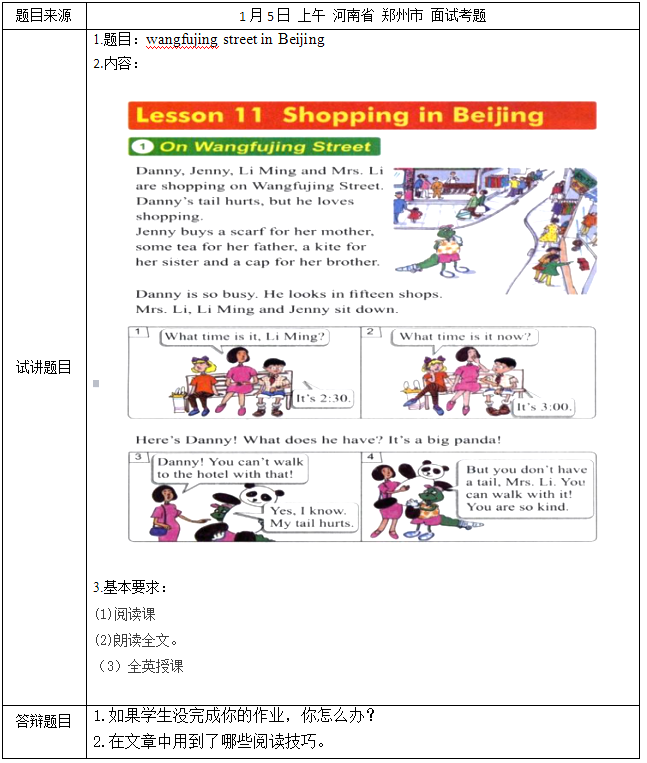
二、考题解析
【教案】
Teaching aims:
Knowledge aim:
Students can master the sentence :”what time is it? it is ..” and you can/ can not ...”
Ability aim:
Students can improve their reading skills including scanning and skimming skills
Emotional aim:
Students can be more interested in English and take part in activities.
Key and difficult point:
Key Point: know how to ask about the time and master the sentences::”what time is it? it is ..” and you can/ can not ...”
Difficult Point: use the sentence structure in daily life.
Teaching procedure:
Step 1: Warming-up
1. Greetings.
2. Ask students how did they spend their weekend.
3. Ask students “do you know wangfujing street in Beijing”
Step 2: Pre-reading
1. show a picture about wangfujing street and ask “what can you see in this picture”
2. draw a clock and ask students “Do you know how to ask about time?” and “what can you do at this time?
Step 3: While-reading
Global reading: Ask students :”how many characters in the dialogue?” and “where are they”
Detailed reading: what does Jenny buy and who will get the gift?
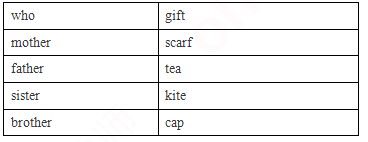
Step4: Post-reading
1. Role-play: two students in a group. One student act as traveller and one student is tour guide. Give them 5 minutes to make dialogue with what we have learnt today.
Step5: Summary and Homework
Summary: ask a student to conclude the content of the lesson and summarize with the whole class.
Homework: ask students to practice the sentence structure learned today with desk mates after class.
Blackboard design:
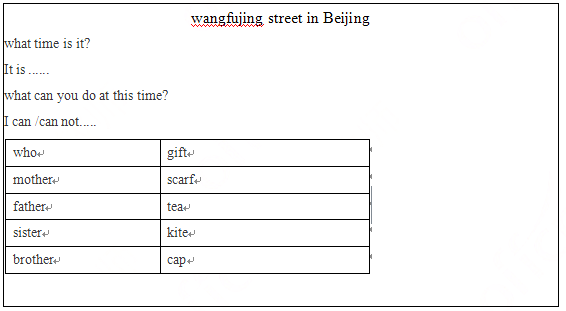
1. What will you do if the students don't finish your homework?
2. What reading skills are used in the passage?答案:解析:1.
Homework is an important means to show students' intelligence and improve their quality. Doing homework is the summary and consolidation of the knowledge learned, so doing homework is one of the important means for students to master knowledge.Third, fourth grade students such as not to assign homework is not conducive to the timely review of students to consolidate the knowledge, is not conducive to students to develop good learning habits. Therefore, how to help students homework on time with high quality is the primary task of every teacher.
firstly, I will talk to students to analyze the reason why he did not finish the homework. The reason maybe as follows: He dose not how to do it without any help. or he thinks homework is so much and can not finish it and so on. Then I will take action according to the reasons.
2.
In order to make students be more interested in reading and can understand the knowledge clearly, I use detailed reading to make students find the detail information and global reading to find the how many characters in the dialogue. In the reading passage. students can master and scanning skills and skimming skills. They can understand the passage step by step. -
第8题:
How do you decide whether a word should enter the students’ active or passive vocabulary?
We have to consider whether the word:
a) is essential for comprehension of context;
b) is commonly used;
c) is used in a wide variety of situations;
d) has more than one meaning (if so, which; if any, to teach).
If our answer to all these four questions is yes, then we have to make it enter the students’ active vocabulary.
略 -
第9题:
How do you do? Glad to meet you.()
AFine. How are you?
BHow do you do? Glad to meet you, too.
CHow are you? Thank you!
DNice. How are you?
B
略 -
第10题:
How()do you have?
- A、many baggage
- B、much baggages
- C、many baggages
- D、much baggage
正确答案:D -
第11题:
问答题◆Topic 9: Primary Functions of University Education Questions for Reference: 1. Most people think that teachers should teach students how to judge right and wrong and how to behave well. Please discuss this view. 2. Why do you think lots of teachers pay much more attention to teaching students academic subjects than other aspects? 3. What’s your opinion of the primary functions of university education? Why do you think so?正确答案: 【参考答案】
There is no doubt that helping students find a job is one of the primary functions of university education, but universities do exist for other purposes such as improving students’ analytical skills and raising students’ moral standards.
A university education can be seen as a process of improving students’ analytical thinking. The variety of courses offered at university inspires students in various ways, therefore improving their analytical ability. For example, science courses such as math and biology help students develop a rational way of thinking whereas arts courses such as literature let students ponder over issues from a logical, multi-dimensional perspective; and courses in social sciences force students to recognize the ideas that have been traditionally assumed to be acceptable and unproblematic. With the development of these types of analytical thinking, graduates can face future challenges with more confidence and enthusiasm.
Also, university education is expected to improve students’ moral standards. This is rooted in universities? Belief that students’ awareness of responsibility towards their community and their country is of high importance. In this ever-degrading society and civilization, students are encouraged actively participate in improving the local community. A university that provides care and facilities for physically disadvantaged students may inspire the graduates to better handle situations in the future where they may have to interact with the disabled community. A successful university education is supposed to produce morally sound graduates, therefore increasing their employability.
In conclusion, university education not only helps students locate a decent job but will also develop other qualities such as enhancing their analytical skills and cultivating their hunger and spirit for life.解析: 暂无解析 -
第12题:
单选题How many students do you teach?()AQuite a bit.
BMore boys than girls.
CAbout .
DThree mornings.
正确答案: A解析: 暂无解析 -
第13题:
Many of the students ______ the work although it took some time to learn how to do it.
A. enjoy
B. have to do
C. hate
D. ignore
正确答案:A
37.倒数第二段。选项 C与文章内容相反。选项 B表示不得不做某事。选项 A是正确的。 -
第14题:
How many ______ do you see in the kitchen?
A、tomatos
B、tomatoes
C、tomato
D、the tomato
参考答案: B
-
第15题:
I know you are planning a trip to Europe this autumn.Do you know_______?
A:how much it will cost
B:how much has it cost
C:how much cost it will
D:how many will it cost
正确答案:A -
第16题:
How many holds do you have?
正确答案:We have 5 holds.
-
第17题:
- How many students do you teach? - _________A、Quite a bit.
B、More boys than girls.
C、About 50.
D、Three mornings.
正确答案:C
-
第18题:
初中英语?语法
一、考题回顾
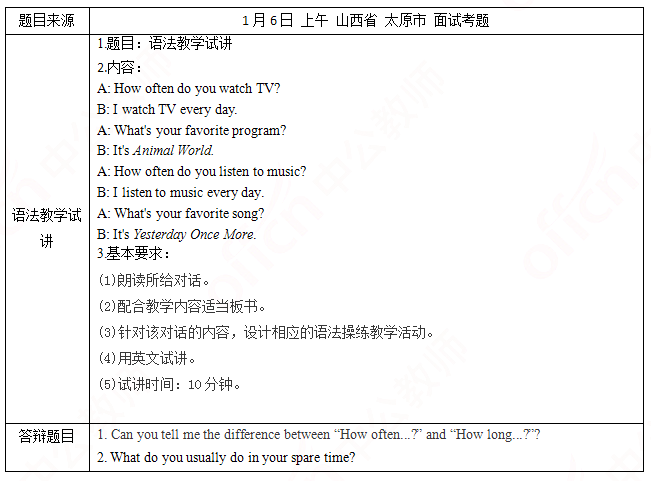
二、考题解析
【教案】
Teaching aims:
Knowledge aim:
Students will know the usage of the frequency adverbs and the sentence structure “How often...?”.
Ability aim:
Students can use the sentence structure freely in their daily life.
Emotional aim:
Students will be more confident in learning English and not afraid of speaking English.
Key and difficult point:
Key Point: Students will know how to use the sentence structure in their daily life.
Difficult Point: Students can cultivate their confidence in learning English.
Teaching procedure:
Step 1: Warming-up
1. Greetings.
2. Ask students what they usually do in their spare time and why, and ask some of them to share with the whole class.
Step 2: Presentation
1. Listen to the tape for the first time and find out what the speaker does every day, and then invite students share their answers.
2. Ask students the following questions: how often does the speaker watch TV? How often does the speaker listen to music? And then write down the sentence on the blackboard.
3. Explain the sentence structure to students: the sentence structure is used to ask questions about how many times something has been done or how many times a state exists in a given period of time.
4. The teacher read the dialogue and ask students to read after it to get a deep understanding.
Step 3: Practice
1. Role-play. Ask students work in pairs and role play the dialogue. Then invite two groups to show in front of the class.
2. Play a game: word cards. Invite two couples of students. Ask one student to choose the card in the box and then ask the other students the question “ how often do you...?” using the activities showed in the card, and then change their role.
Step4: Production
Let students work in groups of 4 and discuss on the topic: how often do you...? according to their own hobbies. After that invite two groups to present in the whole class.
Step5: Summary and Homework
Summary: ask a student to conclude the content of the lesson and summarize with the whole class.
Homework: ask students to ask their friends “ how often do you...?” after class and write down on the exercise book.
Blackboard design:
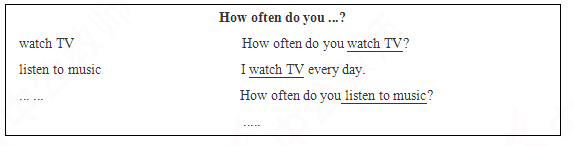
1. Can you tell me the difference between “How often...?” and “How long...?”?
2. What do you usually do in your spare time?答案:解析:1.
The first sentence structure is used to ask questions about how many times something has been done or how many times a state exists in a given period of time. The second sentence structure includes two different usage: one is used to ask how long does it take. It's mainly used to ask questions for a period of time; the other is used to ask for the length of something.
2.
I really have a great passion for sports, i like to do yoga, cycling and jogging. Take jogging for example. It stimulates me to learn more about body -building. Secondly, I am able to meet new friends through my hobby. Lastly, the hobby will teach me some self-discipline, because to do it regularly is so challenging. -
第19题:
—How do you feel it to get along with Miss King
—__________ . Most of the students like her.A.Friendly
B.Easy
C.Helpful
D.Kind答案:B解析:句意为“——你觉得和金小姐相处怎么样?——__________。大多数学生都喜欢她。”第一句问和金小姐相处的感觉,而不是问金小姐本身的性格。故选8。 -
第20题:
How many students do you teach?()
AQuite a bit.
BMore boys than girls.
CAbout .
DThree mornings.
C
略 -
第21题:
How do you do? Glad to meet you.()
- A、Fine. How are you?
- B、How do you do? Glad to meet you, too.
- C、How are you? Thank you!
- D、Nice. How are you?
正确答案:B -
第22题:
-How do you do, Chief Officer! -()
- A、How are you?
- B、Fine, thank you.
- C、How do you do?
- D、Not at all.
正确答案:C -
第23题:
单选题How do you do? Glad to meet you.()AFine. How are you?
BHow do you do? Glad to meet you, too.
CHow are you? Thank you!
DNice. How are you?
正确答案: D解析: 暂无解析 -
第24题:
问答题How do you decide whether a word should enter the students’ active or passive vocabulary?正确答案: We have to consider whether the word:
a) is essential for comprehension of context;
b) is commonly used;
c) is used in a wide variety of situations;
d) has more than one meaning (if so, which; if any, to teach).
If our answer to all these four questions is yes, then we have to make it enter the students’ active vocabulary.解析: 暂无解析