
(ii) Service quality; and (7 marks)
题目
(ii) Service quality; and (7 marks)
相似考题
参考答案和解析
(ii) Quality of service is the totality of features and characteristics of the service package that bear upon its ability to satisfy
client needs. To some extent the number of complaints and the need to provide non-chargeable consultations associated
with the remedying of those complaints is indicative of a service quality problem that must be addressed. Hence this
problem needs to be investigated at the earliest opportunity. Assuming consultants could have otherwise undertaken
chargeable work, the revenue foregone as a consequence of the remedial consultations relating to commercial work
amounted to (180 x £1500) = £27,000. Client complaints received by HLP during the year amounted to 1·24% of
consultations undertaken by commercial advisors whereas none were budgeted. In contrast, competitor MAS received
135 complaints which coincided with the number of non-chargeable consultations undertaken by them. This may
indicate that MAS operate a policy of a remedial consultation in respect of all complaints received from clients.
With regard to the number of on-time consultations, HLP only achieved an on-time consultation percentage of 94·4%
which is far inferior to that of 99% achieved by competitor MAS. Also, HLP re-scheduled the appointment times of
1,620 (3%) of its total consultations whereas competitor MAS only re-scheduled 0·5% of its consultation times. The
percentage number of successful consultations provided by HLP and MAS was 85% and 95% respectively which
indicates that competitor MAS possesses a superior skills-base to that of HLP.
The most alarming statistic lies in the fact that HLP was subject to three successful legal actions for negligence. This
may not only account for the 150% increase in the cost of professional indemnity insurance premiums but may also
result in a loss of client confidence and precipitate a considerable fall in future levels of business should the claims
become much publicised.
更多“(ii) Service quality; and (7 marks)”相关问题
-
第1题:
(ii) Analyse why moving to a ‘no frills’ low-cost strategy would be inappropriate for ONA.
Note: requirement (b) (ii) includes 3 professional marks (16 marks)
正确答案:
(ii) ‘No frills’ low-cost budget airlines are usually associated with the following characteristics. Each of these characteristics
is considered in the context of Oceania National Airlines (ONA).
– Operational economies of scale
Increased flight frequency brings operational economies and is attractive to both business and leisure travellers. In
the international sector where ONA is currently experiencing competition from established ‘no frills’ low-cost budget
airlines ONA has, on average, one flight per day to each city. It would have to greatly extend its flight network, flight
frequency and the size of its aircraft fleet if it planned to become a ‘no frills’ carrier in this sector. This fleet
expansion appears counter to the culture of an organisation that has expanded very gradually since its formation.
Table 1 shows only three aircraft added to the fleet in the period 2004–2006. It is likely that the fleet size would
have to double for ONA to become a serious ‘no frills’ operator in the international sector. In the regional sector, the
flight density, an average of three flights per day, is more characteristic of a ‘no frills’ airline. However, ONA would
have to address the relatively low utilisation of its aircraft (see Tables 1 and 2) and the cost of maintenance
associated with a relatively old fleet of aircraft.
– Reduced costs through direct sales
On-line booking is primarily aimed at eliminating commission sales (usually made through travel agents). ‘No frills’
low-cost budget airlines typically achieve over 80% of their sales on-line. The comparative figure for ONA (see
Table 2) is 40% for regional sales and 60% for international sales, compared with an average of 84% for their
competitors. Clearly a major change in selling channels would have to take place for ONA to become a ‘no frills’
low-cost budget airline. It is difficult to know whether this is possible. The low percentage of regional on-line sales
seems to suggest that the citizens of Oceania may be more comfortable buying through third parties such as travel
agents.
– Reduced customer service
‘No frills’ low-cost budget airlines usually do not offer customer services such as free meals, free drinks and the
allocation of passengers to specific seats. ONA prides itself on its in-flight customer service and this was one of the
major factors that led to its accolade as Regional Airline of the Year. To move to a ‘no frills’ strategy, ONA would
have to abandon a long held tradition of excellent customer service. This would require a major cultural change
within the organisation. It would also probably lead to disbanding the award winning (Golden Bowl) catering
department and the redundancies of catering staff could prove difficult to implement in a heavily unionised
organisation.
Johnson, Scholes and Whittington have suggested that if an organisation is to ‘achieve competitive advantage through
a low price strategy then it has two basic choices. The first is to try and identify a market segment which is unattractive
(or inaccessible) to competitors and in this way avoid competitive pressures to erode price.’ It is not possible for ONA to
pursue this policy in the international sector because of significant competition from established continental ‘no frills’
low-cost budget airlines. It may be a candidate strategy for the regional sector, but the emergence of small ‘no frills’ lowcost
budget airlines in these countries threaten this. Many of these airlines enter the market with very low overheads
and use the ‘no frills’ approach as a strategy to gain market share before progressing to alternative strategies.
Secondly, a ‘no frills’ strategy depends for its success on margin. Johnson, Scholes and Whittington suggest that ‘in the
long run, a low price strategy cannot be pursued without a low-cost base’. Evidence from the scenario suggests that ONA
does not have a low cost base. It continues to maintain overheads (such as a catering department) that its competitors
have either disbanded or outsourced. More fundamentally (from Table 2), its flight crew enjoy above average wages and
the whole company is heavily unionised. The scenario acknowledges that the company pays above industry salaries and
offers excellent benefits such as a generous non-contributory pension. Aircraft utilisation and aircraft age also suggest a
relatively high cost base. The aircraft are older than their competitors and presumably incur greater maintenance costs.
ONA’s utilisation of its aircraft is also lower than its competitors. It seems highly unlikely that ONA can achieve the
changes required in culture, cost base and operations required for it to become a ‘no frills’ low-cost budget airline. Other
factors serve to reinforce this. For example:
– Many ‘no frills’ low-cost budget airlines fly into airports that offer cheaper taking off and landing fees. Many of these
airports are relatively remote from the cities they serve. This may be acceptable to leisure travellers, but not to
business travellers – ONA’s primary market in the regional sector.
– Most ‘no frills’ low-cost budget airlines have a standardised fleet leading to commonality and familiarity in
maintenance. Although ONA has a relatively small fleet it is split between three aircraft types. This is due to
historical reasons. The Boeing 737s and Airbus A320s appear to be very similar aircraft. However, the Boeings
were inherited from OceaniaAir and the Airbuses from Transport Oceania.
In conclusion, the CEO’s decision to reject a ‘no frills’ strategy for ONA appears to be justifiable. It would require major
changes in structure, cost and culture that would be difficult to justify given ONA’s current position. Revolution is the
term used by Baligan and Hope to describe a major rapid strategic change. It is associated with a sudden transformation
required to react to extreme pressures on the organisation. Such an approach is often required when the company is
facing a crisis and needs to quickly change direction. There is no evidence to support the need for a radical
transformation. This is why the CEO brands the change to a ‘no frills’ low-cost budget airline as ‘unnecessary’. The
financial situation (Table 3) is still relatively healthy and there is no evidence of corporate predators. It can be argued
that a more incremental approach to change would be beneficial, building on the strengths of the organisation and the
competencies of its employees. Moving ONA to a ‘no frills’ model would require seismic changes in cost and culture. If
ONA really wanted to move into this sector then they would be better advised to start afresh with a separate brand andairline and to concentrate on the regional sector where it has a head start over many of its competitors. -
第2题:
(c) Discuss how the manipulation of financial statements by company accountants is inconsistent with their
responsibilities as members of the accounting profession setting out the distinguishing features of a
profession and the privileges that society gives to a profession. (Your answer should include reference to the
above scenario.) (7 marks)
Note: requirement (c) includes 2 marks for the quality of the discussion.
正确答案:
(c) Accounting and ethical implications of sale of inventory
Manipulation of financial statements often does not involve breaking laws but the purpose of financial statements is to present
a fair representation of the company’s position, and if the financial statements are misrepresented on purpose then this could
be deemed unethical. The financial statements in this case are being manipulated to show a certain outcome so that Hall
may be shown to be in a better financial position if the company is sold. The retained earnings of Hall will be increased by
$4 million, and the cash received would improve liquidity. Additionally this type of transaction was going to be carried out
again in the interim accounts if Hall was not sold. Accountants have the responsibility to issue financial statements that do
not mislead the public as the public assumes that such professionals are acting in an ethical capacity, thus giving the financial
statements credibility.
A profession is distinguished by having a:
(i) specialised body of knowledge
(ii) commitment to the social good
(iii) ability to regulate itself
(iv) high social status
Accountants should seek to promote or preserve the public interest. If the idea of a profession is to have any significance,
then it must make a bargain with society in which they promise conscientiously to serve the public interest. In return, society
allocates certain privileges. These might include one or more of the following:
– the right to engage in self-regulation
– the exclusive right to perform. particular functions
– special status
There is more to being an accountant than is captured by the definition of the professional. It can be argued that accountants
should have the presentation of truth, in a fair and accurate manner, as a goal. -
第3题:
Discuss the principles and practices which should be used in the financial year to 30 November 2008 to account
for:(c) the purchase of handsets and the recognition of revenue from customers and dealers. (8 marks)
Appropriateness and quality of discussion. (2 marks)
正确答案:Handsets and revenue recognition
The inventory of handsets should be measured at the lower of cost and net realisable value (IAS2, ‘Inventories’, para 9). Johan
should recognise a provision at the point of purchase for the handsets to be sold at a loss. The inventory should be written down
to its net realisable value (NRV) of $149 per handset as they are sold both to prepaid customers and dealers. The NRV is $51
less than cost. Net realisable value is the estimated selling price in the normal course of business less the estimated selling costs.
IAS18, ‘Revenue’, requires the recognition of revenue by reference to the stage of completion of the transaction at the reporting
date. Revenue associated with the provision of services should be recognised as service as rendered. Johan should record the
receipt of $21 per call card as deferred revenue at the point of sale. Revenue of $18 should be recognised over the six month
period from the date of sale. The unused call credit of $3 would be recognised when the card expires as that is the point at which
the obligation of Johan ceases. Revenue is earned from the provision of services and not from the physical sale of the card.
IAS18 does not deal in detail with agency arrangements but says the gross inflows of economic benefits include amounts collected
on behalf of the principal and which do not result in increases in equity for the entity. The amounts collected on behalf of the
principal are not revenue. Revenue is the amount of the ‘commission’. Additionally where there are two or more transactions, they
should be taken together if the commercial effect cannot be understood without reference to the series of transactions as a whole.
As a result of the above, Johan should not recognise revenue when the handset is sold to the dealer, as the dealer is acting as an
agent for the sale of the handset and the service contract. Johan has retained the risk of the loss in value of the handset as they
can be returned by the dealer and the price set for the handset is under the control of Johan. The handset sale and the provision
of the service would have to be assessed as to their separability. However, the handset cannot be sold separately and is
commercially linked to the provision of the service. Johan would, therefore, recognise the net payment of $130 as a customer
acquisition cost which may qualify as an intangible asset under IAS38, and the revenue from the service contract will be recognised
as the service is rendered. The intangible asset would be amortised over the 12 month contract. The cost of the handset from the
manufacturer will be charged as cost of goods sold ($200). -
第4题:
(ii) Evaluate the relative advantages and disadvantages of Chen’s risk management committee being
non-executive rather than executive in nature. (7 marks)
正确答案:
(ii) Advantages and disadvantages of being non-executive rather than executive
The UK Combined Code, for example, allows for risk committees to be made up of either executive or non-executive
members.
Advantages of non-executive membership
Separation and detachment from the content being discussed is more likely to bring independent scrutiny.
Sensitive issues relating to one or more areas of executive oversight can be aired without vested interests being present.
Non-executive directors often bring specific expertise that will be more relevant to a risk problem than more
operationally-minded executive directors will have.
Chen’s four members, being from different backgrounds, are likely to bring a range of perspectives and suggested
strategies which may enrich the options open to the committee when considering specific risks.
Disadvantages of non-executive membership (advantages of executive membership)
Direct input and relevant information would be available from executives working directly with the products, systems
and procedures being discussed if they were on the committee. Non-executives are less likely to have specialist
knowledge of products, systems and procedures being discussed and will therefore be less likely to be able to comment
intelligently during meetings.
The membership, of four people, none of whom ‘had direct experience of Chen’s industry or products’ could produce
decisions taken without relevant information that an executive member could provide.
Non-executive directors will need to report their findings to the executive board. This reporting stage slows down the
process, thus requiring more time before actions can be implemented, and introducing the possibility of some
misunderstanding. -
第5题:
(b) Comment (with relevant calculations) on the performance of the business of Quicklink Ltd and Celer
Transport during the year ended 31 May 2005 and, insofar as the information permits, its projected
performance for the year ending 31 May 2006. Your answer should specifically consider:
(i) Revenue generation per vehicle
(ii) Vehicle utilisation and delivery mix
(iii) Service quality. (14 marks)
正确答案:
difference will reduce in the year ending 31 May 2006 due to the projected growth in sales volumes of the Celer Transport
business. The average mail/parcels delivery of mail/parcels per vehicle of the Quicklink Ltd part of the business is budgeted
at 12,764 which is still 30·91% higher than that of the Celer Transport business.
As far as specialist activities are concerned, Quicklink Ltd is budgeted to generate average revenues per vehicle amounting to
£374,850 whilst Celer Transport is budgeted to earn an average of £122,727 from each of the vehicles engaged in delivery
of processed food. It is noticeable that all contracts with major food producers were renewed on 1 June 2005 and it would
appear that there were no increases in the annual value of the contracts with major food producers. This might have been
the result of a strategic decision by the management of the combined entity in order to secure the future of this part of the
business which had been built up previously by the management of Celer Transport.
Each vehicle owned by Quicklink Ltd and Celer Transport is in use for 340 days during each year, which based on a
365 day year would give an in use % of 93%. This appears acceptable given the need for routine maintenance and repairs
due to wear and tear.
During the year ended 31 May 2005 the number of on-time deliveries of mail and parcel and industrial machinery deliveries
were 99·5% and 100% respectively. This compares with ratios of 82% and 97% in respect of mail and parcel and processed
food deliveries made by Celer Transport. In this critical area it is worth noting that Quicklink Ltd achieved their higher on-time
delivery target of 99% in respect of each activity whereas Celer Transport were unable to do so. Moreover, it is worth noting
that Celer Transport missed their target time for delivery of food products on 975 occasions throughout the year 31 May 2005
and this might well cause a high level of customer dissatisfaction and even result in lost business.
It is interesting to note that whilst the businesses operate in the same industry they have a rather different delivery mix in
terms of same day/next day demands by clients. Same day deliveries only comprise 20% of the business of Quicklink Ltd
whereas they comprise 75% of the business of Celer Transport. This may explain why the delivery performance of Celer
Transport with regard to mail and parcel deliveries was not as good as that of Quicklink Ltd.
The fact that 120 items of mail and 25 parcels were lost by the Celer Transport business is most disturbing and could prove
damaging as the safe delivery of such items is the very substance of the business and would almost certainly have resulted
in a loss of customer goodwill. This is an issue which must be addressed as a matter of urgency.
The introduction of the call management system by Quicklink Ltd on 1 June 2004 is now proving its worth with 99% of calls
answered within the target time of 20 seconds. This compares favourably with the Celer Transport business in which only
90% of a much smaller volume of calls were answered within a longer target time of 30 seconds. Future performance in this
area will improve if the call management system is applied to the Celer Transport business. In particular, it is likely that the
number of abandoned calls will be reduced and enhance the ‘image’ of the Celer Transport business.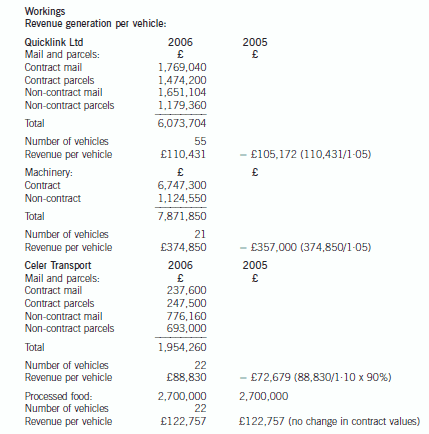

-
第6题:
(ii) the factors that should be considered in the design of a reward scheme for BGL; (7 marks)
正确答案:
(ii) The factors that should be considered in the design of a reward scheme for BGL.
– Whether performance targets should be set with regard to results or effort. It is more difficult to set targets for
administrative and support staff since in many instances the results of their efforts are not easily quantifiable. For
example, sales administrators will improve levels of customer satisfaction but quantifying this is extremely difficult.
– Whether rewards should be monetary or non-monetary. Money means different things to different people. In many
instances people will prefer increased job security which results from improved organisational performance and
adopt a longer term-perspective. Thus the attractiveness of employee share option schemes will appeal to such
individuals. Well designed schemes will correlate the prosperity of the organisation with that of the individuals it
employs.
– Whether the reward promise should be implicit or explicit. Explicit reward promises are easy to understand but in
many respects management will have their hands tied. Implicit reward promises such as the ‘promise’ of promotion
for good performance is also problematic since not all organisations are large enough to offer a structured career
progression. Thus in situations where not everyone can be promoted there needs to be a range of alternative reward
systems in place to acknowledge good performance and encourage commitment from the workforce.
– The size and time span of the reward. This can be difficult to determine especially in businesses such as BGL
which are subject to seasonal variations. i.e. summerhouses will invariably be purchased prior to the summer
season! Hence activity levels may vary and there remains the potential problem of assessing performance when
an organisation operates with surplus capacity.
– Whether the reward should be individual or group based. This is potentially problematic for BGL since the assembly
operatives comprise some individuals who are responsible for their own output and others who work in groups.
Similarly with regard to the sales force then the setting of individual performance targets is problematic since sales
territories will vary in terms of geographical spread and customer concentration.
– Whether the reward scheme should involve equity participation? Such schemes invariably appeal to directors and
senior managers but should arguably be open to all individuals if ‘perceptions of inequity’ are to be avoided.
– Tax considerations need to be taken into account when designing a reward scheme. -
第7题:
(c) Assess the likely criteria which would need to be satisfied for software to be regarded as ‘quality software’.
(4 marks)
正确答案:
(c) The following are important considerations regarding the quality of the business software:
– The software is error-free as this will improve its reliability. Whilst in practice this might not always be achievable the
directors of SSH must recognise the dangers involved in supplying bespoke software which may prove damaging to their
clients’ businesses with the resulting loss of client goodwill.
– The software should meet quality control standards such as those specified by the ISO (International Standards
Organisation).
– The software must be delivered on time. Late delivery of business software will prove problematic since clients may rely
on updated software to meet new customer needs or to fulfil revised business objectives.
– The software must meet the initial specification of the customer. In meeting the specification SSH will be demonstrating
that the software has been produced correctly with an appropriate focus on the requirements of end users.
– The software must be usable i.e. as well as being able to do what it is supposed to do it is important that it is easy to
use.
– The software should be capable of being updated in the light of future changes that occur in the clients’ requirements. -
第8题:
(ii) The shares held in Date Inc and the dividend income received from that company. (7 marks)
正确答案:
(ii) Shares held in Date Inc and the related dividend income
Degrouping charge
There will be a degrouping charge in Nikau Ltd in the year ending 31 March 2008 in respect of the shares in Date Inc.
This is because Nikau Ltd has left the Facet Group within six years of the no gain, no loss transfer of the shares whilst
still owning them.
Nikau Ltd is treated as if it has sold the shares in Date Inc for their market value as at the time of the no gain, no loss
transfer. This will give rise to a gain, ignoring indexation allowance, of £201,000 (£338,000 – £137,000).
This gain will give rise to additional corporation tax of £60,300 (£201,000 x 30%).
Controlled foreign company
Date Inc is a controlled foreign company. The profits of such a company are normally attributed to its UK resident
shareholders such that they are subject to UK corporation tax.
However, none of the profits of Date Inc will be attributed to Nikau Ltd because Date Inc distributes more than 90%
(£115,000/£120,000 = 95·8%) of its chargeable profits to its shareholders.
Dividend income
Nikau Ltd is a UK resident company and is therefore subject to corporation tax on its worldwide income.
The dividend income will be grossed up in respect of the withholding tax giving rise to taxable income of £39,792
(£38,200 x 100/96). There is no underlying tax as there are no taxes on income or capital profits in Palladia.
The corporation tax of £11,938 (£39,792 x 30%) will be reduced by unilateral double tax relief equal to the withholding
tax suffered of £1,592 (£39,792 x 4%) resulting in corporation tax due of £10,346 (£11,938 – £1,592). -
第9题:
(ii) Discuss TWO problems that may be faced in implementing quality control procedures in a small firm of
Chartered Certified Accountants, and recommend how these problems may be overcome. (4 marks)
正确答案:
(ii) Consultation – it may not be possible to hold extensive consultations on specialist issues within a small firm, due to a
lack of specialist professionals. There may be a lack of suitably experienced peers to discuss issues arising on client
engagements. Arrangements with other practices for consultation may be necessary.
Training/Continuing Professional Development (CPD) – resources may not be available, and it is expensive to establish
an in-house training function. External training consortia can be used to provide training/CPD for qualified staff, and
training on non-exam related issues for non-qualified staff.
Review procedures – it may not be possible to hold an independent review of an engagement within the firm due to the
small number of senior and experienced auditors. In this case an external review service may be purchased.
Lack of specialist experience – where special skills are needed within an engagement; the skills may be bought in, for
example, by seconding staff from another practice. Alternatively if work is too specialised for the firm, the work could be
sub-contracted to another practice.
Working papers – the firm may lack resources to establish an in-house set of audit manuals or standard working papers.
In this case documentation can be provided by external firms or professional bodies. -
第10题:
Quality management ensures that an organization,product or service is (1).It has four main components:quality planning,quality assurance,quality control and quality (2).
A.guaranteed
B.sustain
C.good
D.consistent@@@SXB@@@A.improvement
B.change
C.spiral
D.evolution
正确答案:D,A
-
第11题:
Quality?mangement ensures that an organization,product or service is consitent.It has four main components;quality planing,quality assurance( )and quatily improvenment.A.quality obiective
B.quality policy
C.quality control
D.quality system答案:C解析: -
第12题:
With regard to the drivers behind Application Grid based computing, consider the following statements and indicate which is TRUE:// () I. data center complexity leads to lack of predictability making it difficult if not impossible to guarantee quality of service II. data centers must do more with less and find a way to better utilize existing capacity III. growth means added complexity
- A、 I and II
- B、 I and III
- C、 II and III
- D、 I, II and III
正确答案:D -
第13题:
(b) Discuss the key issues which will need to be addressed in determining the basic components of an
internationally agreed conceptual framework. (10 marks)
Appropriateness and quality of discussion. (2 marks)
正确答案:
(b) There are several issues which have to be addressed if an international conceptual framework is to be successfully developed.
These are:
(i) Objectives
Agreement will be required as to whether financial statements are to be produced for shareholders or a wide range of
users and whether decision usefulness is the key criteria or stewardship. Additionally there is the question of whether
the objective is to provide information in making credit and investment decisions.
(ii) Qualitative Characteristics
The qualities to be sought in making decisions about financial reporting need to be determined. The decision usefulness
of financial reports is determined by these characteristics. There are issues concerning the trade-offs between relevance
and reliability. An example of this concerns the use of fair values and historical costs. It has been argued that historical
costs are more reliable although not as relevant as fair values. Additionally there is a conflict between neutrality and the
traditions of prudence or conservatism. These characteristics are constrained by materiality and benefits that justify
costs.
(iii) Definitions of the elements of financial statements
The principles behind the definition of the elements need agreement. There are issues concerning whether ‘control’
should be included in the definition of an asset or become part of the recognition criteria. Also the definition of ‘control’
is an issue particularly with financial instruments. For example, does the holder of a call option ‘control’ the underlying
asset? Some of the IASB’s standards contravene its own conceptual framework. IFRS3 requires the capitalisation of
goodwill as an asset despite the fact that it can be argued that goodwill does not meet the definition of an asset in the
Framework. IAS12 requires the recognition of deferred tax liabilities that do not meet the liability definition. Similarly
equity and liabilities need to be capable of being clearly distinguished. Certain financial instruments could either be
liabilities or equity. For example obligations settled in shares.
(iv) Recognition and De-recognition
The principles of recognition and de-recognition of assets and liabilities need reviewing. Most frameworks have
recognition criteria, but there are issues over the timing of recognition. For example, should an asset be recognised when
a value can be placed on it or when a cost has been incurred? If an asset or liability does not meet recognition criteria
when acquired or incurred, what subsequent event causes the asset or liability to be recognised? Most frameworks do
not discuss de-recognition. (The IASB’s Framework does not discuss the issue.) It can be argued that an item should be
de-recognised when it does not meet the recognition criteria, but financial instruments standards (IAS39) require other
factors to occur before financial assets can be de-recognised. Different attributes should be considered such as legal
ownership, control, risks or rewards.
(v) Measurement
More detailed discussion of the use of measurement concepts, such as historical cost, fair value, current cost, etc are
required and also more guidance on measurement techniques. Measurement concepts should address initial
measurement and subsequent measurement in the form. of revaluations, impairment and depreciation which in turn
gives rise to issues about classification of gains or losses in income or in equity.
(vi) Reporting entity
Issues have arisen over what sorts of entities should issue financial statements, and which entities should be included
in consolidated financial statements. A question arises as to whether the legal entity or the economic unit should be the
reporting unit. Complex business arrangements raise issues over what entities should be consolidated and the basis
upon which entities are consolidated. For example, should the basis of consolidation be ‘control’ and what does ‘control’
mean?
(vii) Presentation and disclosure
Financial reporting should provide information that enables users to assess the amounts, timing and uncertainty of the
entity’s future cash flows, its assets, liabilities and equity. It should provide management explanations and the limitations
of the information in the reports. Discussions as to the boundaries of presentation and disclosure are required. -
第14题:
(b) Discuss how management’s judgement and the financial reporting infrastructure of a country can have a
significant impact on financial statements prepared under IFRS. (6 marks)
Appropriateness and quality of discussion. (2 marks)
正确答案:
(b) Management judgement may have a greater impact under IFRS than generally was the case under national GAAP. IFRS
utilises fair values extensively. Management have to use their judgement in selecting valuation methods and formulating
assumptions when dealing with such areas as onerous contracts, share-based payments, pensions, intangible assets acquired
in business combinations and impairment of assets. Differences in methods or assumptions can have a major impact on
amounts recognised in financial statements. IAS1 expects companies to disclose the sensitivity of carrying amounts to the
methods, assumptions and estimates underpinning their calculation where there is a significant risk of material adjustment
to their carrying amounts within the next financial year. Often management’s judgement is that there is no ‘significant risk’
and they often fail to disclose the degree of estimation or uncertainty and thus comparability is affected.
In addition to the IFRSs themselves, a sound financial reporting infrastructure is required. This implies effective corporate
governance practices, high quality auditing standards and practices, and an effective enforcement or oversight mechanism.
Therefore, consistency and comparability of IFRS financial statements will also depend on the robust nature of the other
elements of the financial reporting infrastructure.
Many preparers of financial statements will have been trained in national GAAP and may not have been trained in the
principles underlying IFRS and this can lead to unintended inconsistencies when implementing IFRS especially where the
accounting profession does not have a CPD requirement. Additionally where the regulatory system of a country is not well
developed, there may not be sufficient market information to utilise fair value measurements and thus this could lead to
hypothetical markets being created or the use of mathematical modelling which again can lead to inconsistencies because of
lack of experience in those countries of utilising these techniques. This problem applies to other assessments or estimates
relating to such things as actuarial valuations, investment property valuations, impairment testing, etc.
The transition to IFRS can bring significant improvement to the quality of financial performance and improve comparability
worldwide. However, there are issues still remaining which can lead to inconsistency and lack of comparability with those
financial statements. -
第15题:
(b) Discuss the relative costs to the preparer and benefits to the users of financial statements of increased
disclosure of information in financial statements. (14 marks)
Quality of discussion and reasoning. (2 marks)
正确答案:
(b) Increased information disclosure benefits users by reducing the likelihood that they will misallocate their capital. This is
obviously a direct benefit to individual users of corporate reports. The disclosure reduces the risk of misallocation of capital
by enabling users to improve their assessments of a company’s prospects. This creates three important results.
(i) Users use information disclosed to increase their investment returns and by definition support the most profitable
companies which are likely to be those that contribute most to economic growth. Thus, an important benefit of
information disclosure is that it improves the effectiveness of the investment process.
(ii) The second result lies in the effect on the liquidity of the capital markets. A more liquid market assists the effective
allocation of capital by allowing users to reallocate their capital quickly. The degree of information asymmetry between
the buyer and seller and the degree of uncertainty of the buyer and the seller will affect the liquidity of the market as
lower asymmetry and less uncertainty will increase the number of transactions and make the market more liquid.
Disclosure will affect uncertainty and information asymmetry.
(iii) Information disclosure helps users understand the risk of a prospective investment. Without any information, the user
has no way of assessing a company’s prospects. Information disclosure helps investors predict a company’s prospects.
Getting a better understanding of the true risk could lower the price of capital for the company. It is difficult to prove
however that the average cost of capital is lowered by information disclosure, even though it is logically and practically
impossible to assess a company’s risk without relevant information. Lower capital costs promote investment, which can
stimulate productivity and economic growth.
However although increased information can benefit users, there are problems of understandability and information overload.
Information disclosure provides a degree of protection to users. The benefit is fairness to users and is part of corporate
accountability to society as a whole.
The main costs to the preparer of financial statements are as follows:
(i) the cost of developing and disseminating information,
(ii) the cost of possible litigation attributable to information disclosure,
(iii) the cost of competitive disadvantage attributable to disclosure.
The costs of developing and disseminating the information include those of gathering, creating and auditing the information.
Additional costs to the preparers include training costs, changes to systems (for example on moving to IFRS), and the more
complex and the greater the information provided, the more it will cost the company.
Although litigation costs are known to arise from information disclosure, it does not follow that all information disclosure leads
to litigation costs. Cases can arise from insufficient disclosure and misleading disclosure. Only the latter is normally prompted
by the presentation of information disclosure. Fuller disclosure could lead to lower costs of litigation as the stock market would
have more realistic expectations of the company’s prospects and the discrepancy between the valuation implicit in the market
price and the valuation based on a company’s financial statements would be lower. However, litigation costs do not
necessarily increase with the extent of the disclosure. Increased disclosure could reduce litigation costs.
Disclosure could weaken a company’s ability to generate future cash flows by aiding its competitors. The effect of disclosure
on competitiveness involves benefits as well as costs. Competitive disadvantage could be created if disclosure is made relating
to strategies, plans, (for example, planned product development, new market targeting) or information about operations (for
example, production-cost figures). There is a significant difference between the purpose of disclosure to users and
competitors. The purpose of disclosure to users is to help them to estimate the amount, timing, and certainty of future cash
flows. Competitors are not trying to predict a company’s future cash flows, and information of use in that context is not
necessarily of use in obtaining competitive advantage. Overlap between information designed to meet users’ needs and
information designed to further the purposes of a competitor is often coincidental. Every company that could suffer competitive
disadvantage from disclosure could gain competitive advantage from comparable disclosure by competitors. Published figures
are often aggregated with little use to competitors.
Companies bargain with suppliers and with customers, and information disclosure could give those parties an advantage in
negotiations. In such cases, the advantage would be a cost for the disclosing entity. However, the cost would be offset
whenever information disclosure was presented by both parties, each would receive an advantage and a disadvantage.
There are other criteria to consider such as whether the information to be disclosed is about the company. This is both a
benefit and a cost criterion. Users of corporate reports need company-specific data, and it is typically more costly to obtain
and present information about matters external to the company. Additionally, consideration must be given as to whether the
company is the best source for the information. It could be inefficient for a company to obtain or develop data that other, more
expert parties could develop and present or do develop at present.
There are many benefits to information disclosure and users have unmet information needs. It cannot be known with any
certainty what the optimal disclosure level is for companies. Some companies through voluntary disclosure may have
achieved their optimal level. There are no quantitative measures of how levels of disclosure stand with respect to optimal
levels. Standard setters have to make such estimates as best they can, guided by prudence, and by what evidence of benefits
and costs they can obtain. -
第16题:
(ii) Using the previous overhead allocation basis (as per note 4), calculate the budgeted profit/(loss)
attributable to each type of service for the year ending 31 December 2006 and comment on the results
obtained using the previous and revised methods of overhead allocation. (5 marks)
正确答案: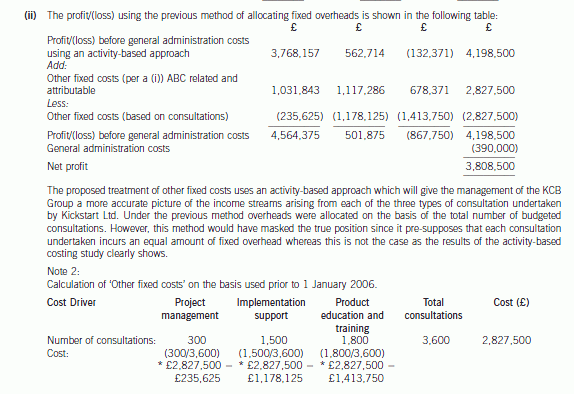
-
第17题:
(c) Excluding the number of complaints by patients, identify and briefly explain THREE quantitative
non-financial performance measures that could be used to assess the ‘quality of service’ provided by the
Dental Health Partnership. (3 marks)
正确答案:
(c) In order to assess the quality of patient care provided by the Dental Health Partnership the following performance measures
might be used:
– The percentage of ‘on time’ treatment of those patients who arrived prior to their appointment time would provide an
indication regarding the effectiveness of the scheduling of appointments by the Dental Health Partnership.
– the percentage of patient appointments which were re-arranged at the request of the Dental Health Partnership.
Rearranged appointments represent the provision of a lower level of service provision to clients who may, as a result,
switch to an alternative dental practice.
– the percentage of patients who return for treatment after their first appointment would provide an indication that they
were satisfied with the service they received.
– the percentage of patients who were able to gain an appointment at their preferred date and time is an indication of the
availability of the service to clients.
Note: Candidates were only required to discuss three measures. -
第18题:
(iii) assesses TSC in terms of financial performance, competitiveness, service quality, resource utilisation,
flexibility and innovation and discusses the interrelationships between these terms, incorporating
examples from within TSC; and (10 marks)
正确答案:
(iii) The terms listed may be seen as representative of the dimensions of performance. The dimensions may be analysed into
results and determinants.
The results may be measured by focusing on financial performance and competitiveness. Financial performance may
be measured in terms of revenue and profit as shown in the data in the appendix of the question in respect of TSC. The
points system in part (a) of the answer shows which depots have achieved or exceeded the target set. In addition,
liquidity is another aspect of the measurement of financial performance. The points total in part (a) showed that
Leonardotown and Michaelangelotown depots appear to have the best current record in aspects of credit control.
15
Competitiveness may be measured in terms of sales growth but also in terms of market share, number of new
customers, etc. In the TSC statistics available in (a) we only have data for the current quarter. This shows that three of
the four depots listed have achieved increased revenue compared to target.
The determinants are the factors which may be seen to contribute to the achievement of the results. Quality, resource
utilisation, flexibility and innovation are cited by Fitzgerald and Moon as examples of factors that should contribute to
the achievement of the results in terms of financial performance and competitiveness. In TSC a main quality issue
appears to be customer care and service delivery. The statistics in the points table in part (a) of the answer show that
the Raphaeltown depot appears to have a major problem in this area. It has only achieved one point out of the six
available in this particular segment of the statistics.
Resource utilisation for TSC may be measured by the level of effective use of drivers and vehicles. To some extent, this
is highlighted by the statistics relating to customer care and service delivery. For example, late collection of consignments
from customers may be caused by a shortage of vehicles and/or drivers. Such shortages could be due to staff turnover,
sickness, etc or problems with vehicle maintenance.
Flexibility may be an issue. There may, for example, be a problem with vehicle availability. Possibly an increased focus
on sources for short-term sub-contracting of vehicles/collections/deliveries might help overcome delay problems.
The ‘target v actual points system’ may be seen as an example of innovation by the company. This gives a detailed set
of measures that should provide an incentive for improvement at all depots. The points system may illustrate the extent
of achievement/non-achievement of company strategies for success. For example TSC may have a customer care
commitment policy which identifies factors that should be achieved on a continuing basis. For example, timely collection
of consignments, misdirected consignments re-delivered at no extra charge, prompt responses to customer claims and
compensation for customers. -
第19题:
(ii) Advise Andrew of the tax implications arising from the disposal of the 7% Government Stock, clearly
identifying the tax year in which any liability will arise and how it will be paid. (3 marks)
正确答案:
(ii) Government stock is an exempt asset for the purposes of capital gains tax, however, as Andrew’s holding has a nominal
value in excess of £5,000, a charge to income tax will arise under the accrued income scheme. This charge to income
tax will arise in 2005/06, being the tax year in which the next interest payment following disposal falls due (20 April
2005) and it will relate to the income accrued for the period 21 October 2004 to 14 March 2005 of £279 (145/182
x £350). As interest on Government Stock is paid gross (unless the holder applies to receive it net), the tax due of £112
(£279 x 40%) will be collected via the self-assessment system and as the interest was an ongoing source of income
will be included within Andrew’s half yearly payments on account payable on 31 January and 31 July 2006. -
第20题:
(c) (i) Identify and describe FOUR quality control procedures that are applicable to the individual audit
engagement; and (8 marks)
正确答案:
(c) (i) ISQC 1 Quality Control for Firms That Perform. Audits and Reviews of Historical Financial Information and Other
Assurance and Related Services Engagements provides guidance on the overall quality control systems that should be
implemented by an audit firm. ISA 220 Quality Control for Audits of Historical Financial Information specifies the quality
control procedures that should be applied by the engagement team in individual audit assignments.
Procedures include the following:
Client acceptance procedures
There should be full documentation, and conclusion on, ethical and client acceptance issues in each audit assignment.
The engagement partner should consider whether members of the audit team have complied with ethical requirements,
for example, whether all members of the team are independent of the client. Additionally, the engagement partner should
conclude whether all acceptance procedures have been followed, for example, that the audit firm has considered the
integrity of the principal owners and key management of the client. Other procedures on client acceptance should
include:
– Obtaining professional clearance from previous auditors
– Consideration of any conflict of interest
– Money laundering (client identification) procedures.
Engagement team
Procedures should be followed to ensure that the engagement team collectively has the skills, competence and time to
perform. the audit engagement. The engagement partner should assess that the audit team, for example:
– Has the appropriate level of technical knowledge
– Has experience of audit engagements of a similar nature and complexity
– Has the ability to apply professional judgement
– Understands professional standards, and regulatory and legal requirements.
Direction
The engagement team should be directed by the engagement partner. Procedures such as an engagement planning
meeting should be undertaken to ensure that the team understands:
– Their responsibilities
– The objectives of the work they are to perform
– The nature of the client’s business
– Risk related issues
– How to deal with any problems that may arise; and
– The detailed approach to the performance of the audit.
The planning meeting should be led by the partner and should include all people involved with the audit. There should
be a discussion of the key issues identified at the planning stage.
Supervision
Supervision should be continuous during the engagement. Any problems that arise during the audit should be rectified
as soon as possible. Attention should be focused on ensuring that members of the audit team are carrying out their work
in accordance with the planned approach to the engagement. Significant matters should be brought to the attention of
senior members of the audit team. Documentation should be made of key decisions made during the audit engagement.
Review
The review process is one of the key quality control procedures. All work performed must be reviewed by a more senior
member of the audit team. Reviewers should consider for example whether:
– Work has been performed in accordance with professional standards
– The objectives of the procedures performed have been achieved
– Work supports conclusions drawn and is appropriately documented.
The review process itself must be evidenced.
Consultation
Finally the engagement partner should arrange consultation on difficult or contentious matters. This is a procedure
whereby the matter is discussed with a professional outside the engagement team, and sometimes outside the audit
firm. Consultations must be documented to show:
– The issue on which the consultation was sought; and
– The results of the consultation. -
第21题:
(b) A recruitment service offered to clients. (7 marks)
正确答案:
(b) Recruitment service
IFAC’s Code of Ethics for Professional Accountants does not prohibit firms from offering a recruitment service to client
companies. However several ethical problems could arise if the service were offered. The severity of these problems would
depend on the exact nature of the service provided, and the role of the person recruited into the client’s organisation.
Specific ethical threats could include:
Self-interest – clearly the motive for Becker & Co to offer this service is to generate income from audit clients, thereby creating
a financial self-interest threat. The amount received for the recruitment service depends on the magnitude of the salary of the
person employed. The more senior the person recruited, the higher their salary is likely to be, and therefore the higher the
fee to be paid to Becker & Co.
In addition, the firm could be tempted to advise positively on the recruitment of an individual merely to receive the relevant
recruitment fee, without properly considering the suitability of the person for the role.
Familiarity – when performing the audit, the auditors may be less likely to criticise or challenge the work performed by a
person they helped to recruit, as any significant problems discovered may make the recruitment appear ill-advised.
Management involvement – there is also a threat that the audit firm could be perceived to be making management decisions
by selecting employees. The firm could offer services such as reviewing the professional qualifications of a number of
applicants, and providing advice on the applicant’s suitability for the post. In addition the firm could draw up a shortlist of
candidates for interview, using criteria specified by the client. However in all cases, the final decision as to whom to hire must
be made by the client, as the audit firm should not make, or be perceived to be making, management decisions.
The threats discussed above would increase in significance if the recruitee took on a role in key management pertaining to
the finance function, such as finance director or financial controller. The threats would be less severe if the audit firm advised
on the recruitment of a junior member of the client’s finance function.
If these threats could not be reduced to a level less than clearly insignificant, then the recruitment service should not be
offered.
Commercial evaluation
The firm should consider whether there is likely to be much demand for the potential service before developing such a
resource. Some form. of market research is essential.
Offering this type of service represents a significant departure from normal audit services. The firm should consider whether
there is sufficient knowledge and expertise to offer a recruitment service. Ingrid Sharapova seems to have some experience,
but her skills may be out of date, and may not be specifically relevant to the recruitment of finance professionals. It may be
that considerable training and possibly the attainment of a new professional qualification relevant to recruitment may be
necessary for a credible service to be offered to clients.
If the recruitment service proved successful, then Ingrid could be faced with too much work as she is the only person with
relevant experience, and has no one to delegate to. If the firm decides to offer this service, then one other person should
receive appropriate training, to cover for Ingrid’s holidays and any sick leave, and to provide someone for Ingrid to delegate
to. The financial cost of such training should be considered.
Finally, Becker & Co should consider the potential damage to the firm’s reputation if the service offered is not of a high quality.
If the partners decide to pursue this business opportunity, they may wish to consider setting it up as a separate entity, so that
if the business fails or its reputation is questioned, the damage to Becker & Co would be minimised. -
第22题:
Sometimes the bill of lading refers to the loading marks inscribed on the goods,and sometimes there ______ a statement as to their quality.
A.has
B.provides
C.is
D.supplies
正确答案:C
-
第23题:
What are two benefits of control plane policing?()
- A、protection against denial of service (DoS) attacks at infrastructure routers and switches
- B、 protection against known worm attacks in routers and switches
- C、quality of service (QoS) control for packets that are sourced from the data plane of Cisco routers and switches
- D、quality of service control (QoS) for packets that are destined to the control plane of Cisco routers and switches
- E、quality of service (QoS) control for packets that are destined to the data plane of Cisco routers and switches
正确答案:A,D